

Black Privilege and the Fatigue it Creates
A phenomenon known as Black Fatigue is growing among many Americans who are tired of the rude and anti-social behavior in parts of black culture, and the unspoken privilege it creates.

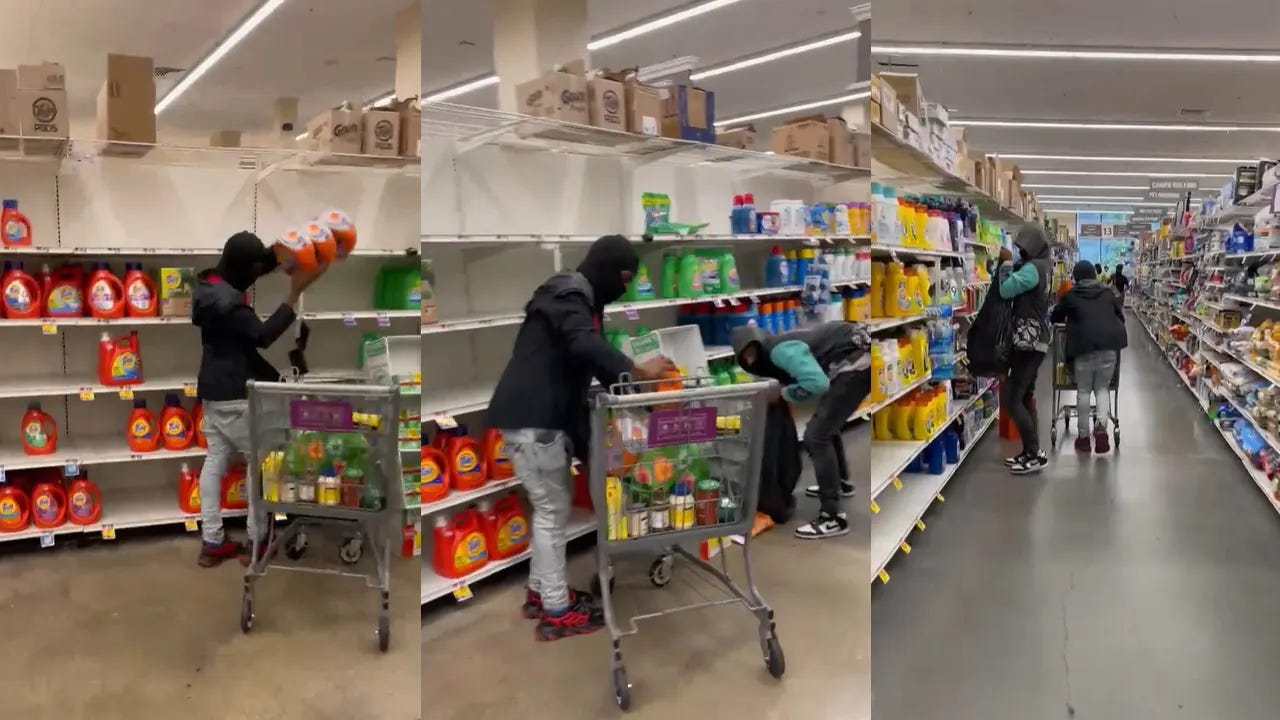
Among all the viral memes and online trends one sees while scrolling through social media, one term has been coming up more regularly: “black fatigue.” The term has been around since 2015, and appears to have originated from a board on a site that has become the Twilight Zone of the internet (a site that is “both shadow and substance, of things and ideas”), 4Chan. As with many post-modern neologisms, its meaning depends entirely on who is using it. Initially, it indicated a feeling of frustration by black people for either being tokenized, or for being held up as being remarkable simply because they were black. This definition was later re-formalized (or perhaps inverted) in the 2020 book by Mary-Frances Winters Black Fatigue: How Racism Erodes the Mind, Body and Spirit, which stated that the term referred to “the fatigue that some Black people feel from being the consistent subjects of racism and microaggression.”
However, since 2022 when the term was added to the Urban Dictionary, its definition has again been transformed, and is currently being used by people of all races to express an exasperation of “black people acting out in public, being loud and obnoxious” as well a “deep mental exhaustion from being forced to care about black people and their actions 24/7.” This is the definition that is currently trending online, as video after video appears to show some segments of the black community being rude, entitled, and belligerent in public, and then crying “racism” when they are called out for acting in an unacceptable manner.
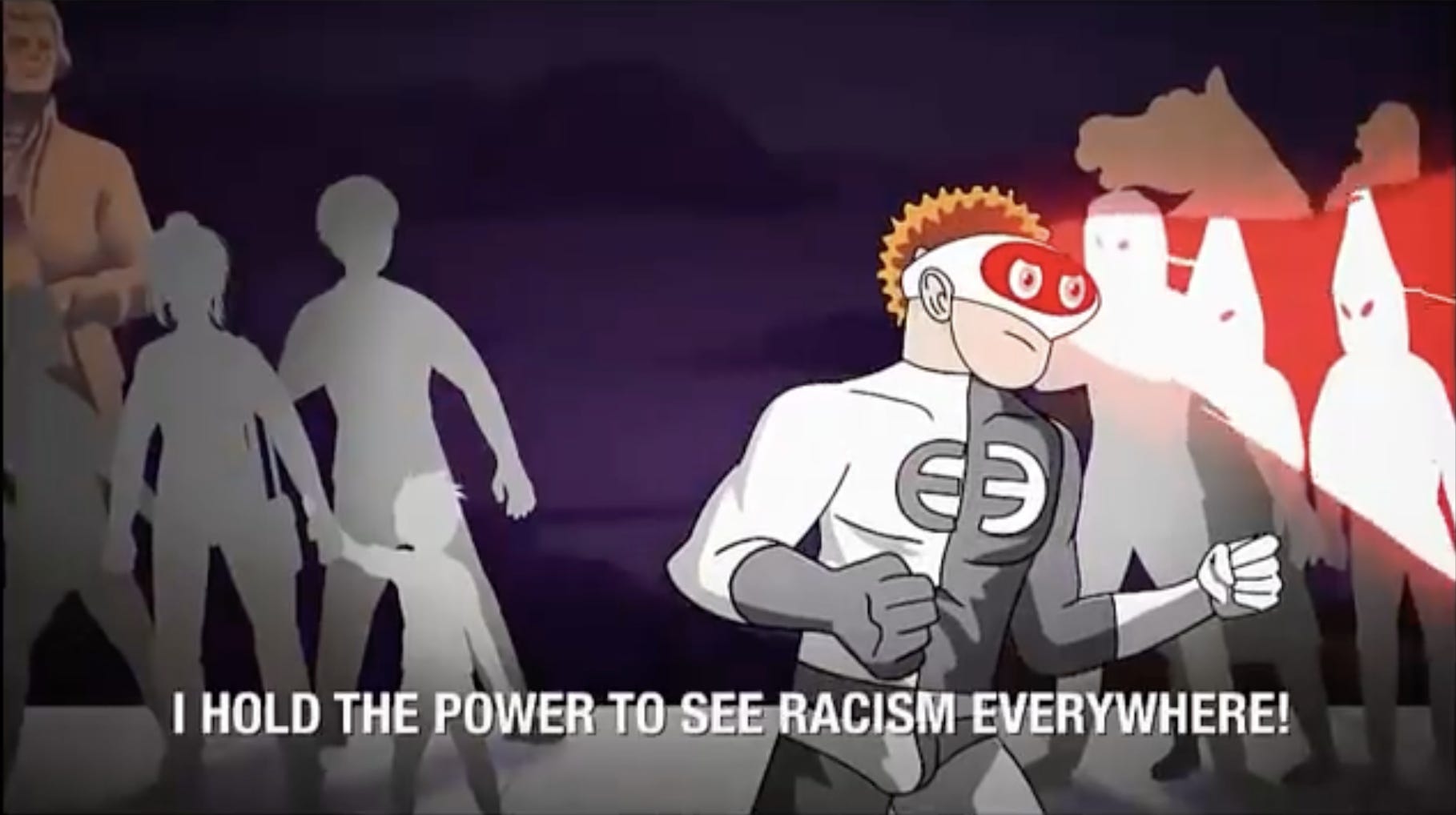
This behavior, combined with the victim mentality of woke critical race theories that have been filtered down to their lowest common denominator, has created a subculture among black people. A subculture that includes individuals such as Nikole Hannah-Jones (of 1619 Project fame) and the “super”-hero known as the “Ethnic Enhancer” from the documentary No Safe Spaces, who see racism and oppression everywhere, in everyone, and in every event.
While it is a reasonable assumption to recognize that the reality one sees online through the lens of social media is very different from real life. Unfortunately, however, this is increasingly not always the case. The same algorithms which push online rage bait are now affecting people’s behavior in real life. And when it comes to black fatigue, I can speak from experience.
Black Fatigue IRL
As I have mentioned before, my day job is that of a mid-level manager at a chain retail store, one where I have experience working in loss prevention. Anyone who has entered a store and seen all manner of items locked up or attached to security devices knows that retail theft is a serious problem. While our company has a hands-off policy, we are still vigilant about spotting potential shoplifters. And contrary to what most people think, the policy is not based on skin color, age, sex or how someone dresses, but rather on their behavior and actions. So many of the shoplifters think they are being clever and discrete in their thievery, but probably about ninety percent are utterly predictable in their behavior. And while our store has experienced thieves of all races and ages, it is no exaggeration to observe that, for whatever reason, it has seen a rise in unruly and blatant larcenous behavior among black youth.
Recently, two black youths (maybe ages of around 12 or 13) entered the store with one carrying an igloo cooler, so I knew, based on experience, that the chance of a theft taking place was heightened. Presumably to create a distraction, the other young person got into a wheelchair that we keep for disabled customers and started running around. I questioned him and asked if he really needed it, to which he replied, “No.” So I asked him to get up out of the chair, so that I could take it back up front to be ready for a person in need. He wanted to ride it back, but I said no, and that I would take it. After arguing back and forth, another member of management came and said the young man could ride it up, while we followed him from behind.
On the way up to the front of the store, he proceeded to let loose an entire litany of profanity and threats about how I “better not meet him outside of work” or “better not end up in his neighborhood.” When he got to the front and got out of the electric wheelchair he walked twenty feet over to me and got right up in my face (I could feel his spittle) and proceed to continue his “bad boy” braggadocio before I walked away. He followed me further until the manager yelled at him to get out, and he finally left.
While what happened to me was somewhat unusual in its brazenness, it is not uncommon. Our store has seen an increase in shoplifting from younger and younger kids, such as those between the ages of 8-13. The police are helpful and sympathetic the problem, but they openly admit that there is nothing they can really do since the lawbreakers are minors. The most help they can offer is to call the parents, but more often than not the parents will blow off their kids’ shoplifting as being “no big deal.” This, regrettably, is the same attitude the police tell us any prosecutor or judge will take when it comes to minors stealing candy or small jewelry items. All of these miscreants who continuously pilfer stuff from retail establishments know this, and use it to their advantage as they lie to your face, swear at you in the most undecipherable yet profane manner, and (as in the case with the joyrider in the wheelchair) threaten you without one ounce of concern of suffering any consequences.
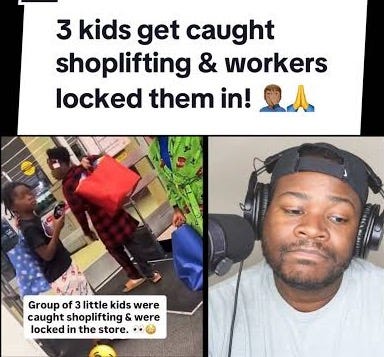
Moreover, there is no shortage of people, even other customers who obviously don’t preach what they themselves practice, who will offer up excuses for the offenders and admonish us not to ruin their future by calling the police, or to try and think about what kind of hard life they must have that makes them turn to theft. The excuses are nearly endless and there is almost never any sense that stealing is wrong, or that the young persons need to be held accountable for their actions. This to me encapsulates what the term black fatigue means, and there are days when my coworkers and I just about reach the limits of what we are willing to put up with.
Uncomfortable Truths Behind Black Crime and Fatigue
Since it is considered ideologically gauche to comment on cultures or races other than one’s own—in this case black culture—I will defer to cultural critic Chi Brown. Chi runs a YouTube channel called Consider Culture, where he has been commenting on the more deleterious aspects of black culture from a conservative and libertarian-leaning point of view for over a decade.

According to Brown, there are two major factors currently driving the majority of the dysfunction and criminality in the black community.
The first is the continued glorification of ghetto culture. He explains how the legitimate struggle for civil rights led to always highlighting what the black community lacked at the expense of what they could and already had accomplished. This engendered the rise of a social identity, which equated being authentically black with being poor, oppressed, and rising up “from the streets.” This, according to Brown, is why you will see black people from middle-class upbringings, like the rapper Drake or Jasmine Crockett, adopt ghetto mannerisms so as to appear “more black.” This singular fixation on ghetto culture went mainstream through hip-hop and rap culture in the late 80’s and throughout the 90’s, and has been pushed and amplified by the Left and social media ever since.
The second major factor responsible for all the crime and dysfunction in the black community is the removal of social barriers or cultural corrections which traditionally kept such anti-social behavior in check. Brown comments, “in a lot of black America, those corrections got switched off, one at a time some got switched off by other people and some got switched off by ourselves.”
Those barriers are:
1. The Removal of the Father from Black Families.
Without a devoted father to guide and raise a son, “boys turn to somewhere else to learn what it means to be a man, like the street. But all the street offers is the very thing a father would keep in check.”
2. The Removal of the Corrective Force of Schools.
Since kid traditionally spent much of their days in school, they were expected to play a part in addressing poor behavior. However, at some point public schools decided the best way to deal with too many black youths having to be disciplined or suspended for bad behavior was simply to stop suspending them. This is an issue the Everyman’s Auguste Meyrat has written about and has first-hand experience with. When black students are not given correction for disruptive behavior, those kids realize they can scam the system to keep on acting out without consequences.
3. The Removal of the Corrective Power of Police.
While being careful not to ignore problems with bad policing, Brown also states that after the death of a petty criminal named Freddy Gray in the city of Baltimore in 2015 and riots broke out, there was a marked change in the way police operated. You may remember this event, if only for the city’s mayor famously saying in a press conference that she wanted make sure to give “those who wished to destroy, space to do that as well.” The police ended up pulling back from enforcing any sense of order, and this was later dubbed the Ferguson Effect in the wake of the shooting of violent shoplifter named Michael Brown. After this event, like the teachers in schools, some police forces solved the overabundance of crime (and avoided being called racist) by making even less effort to enforce the law.
4. The Failure of the Black Community to Correct Itself.
Brown explains how blacks themselves made, “snitching the worst thing a black person can do...and to make loyalty to the race more important than loyalty to the truth.” He then recounts a story of how when he was young, he had attended a predominantly white private school. He was visiting with a friend from “the hood” who was mocking him about having too many white friends which grew heated enough that his friend wanted to fight about it. Brown told his friend he didn’t want to fight over it, to which his friend replied, “You’ve been hanging around those white boys too long, that’s why you won’t fight me.”
That statement stuck with Brown his entire life because to him it meant that his friend,
“believed that being quick to throw hands was what it meant to be black, that backing down made me less black. And here’s the kicker, his parents were deep into civil rights. That’s correction switching itself off! Inside his head he was taught that violence was an authentic part of being black, that the calm was the sell-out part. When a community starts teaching that, that’s when the community stops correcting itself and starts protecting the stuff that is killing us.”
5. The Failure the Media to Report the Truth About Crime in the Black Community.
Brown comments that the failure of the media to use accurate language in reporting things like “teen takeovers” or by using euphemistic language like “mostly peaceful protesting” not only hides the severity of the troubles in the community, but gives the black community an out for having to accept responsibility for dysfunctional behavior. As Brown points out,
“Just like the teachers and the police, they take a behavior problem and turn the perpetrators into victims...(however) the people doing this framing get to feel like the good guys, and the kids get told over and over that nothing they do is ever their fault. And who pays that bill? Us! The same people who live in those neighborhoods.”
The Two Words we Won’t Use but Should!
In looking at my own experiences working in retail, in conjunction with Chi Brown’s assessment on the problems in some segments of the black community, it is clear that the issue is one of holding everyone else to certain level of accountability, but holding the black community to a different (and lesser) standard. This is what some have called the “bigotry of low expectations,” or what black cultural commentator and radio host Tommy Sotomayor has pointed out as the irritating tendency of white people to see black people as naughty little kids, or worse, pets, that money and motivational speeches can somehow “fix.”
Based on my own experience I mostly agree with these sentiments. To me the widespread willingness to ignore or exempt black people from the ordinary social, legal, and moral expectations that we expect from everyone else should not be seen as a sign of respect for their culture and history. Instead, it should be seen as a patronizing and offhand (and incorrect) assumption that blacks are a permanently or perennially damaged group of people who will always potentially be seen as immature citizens.
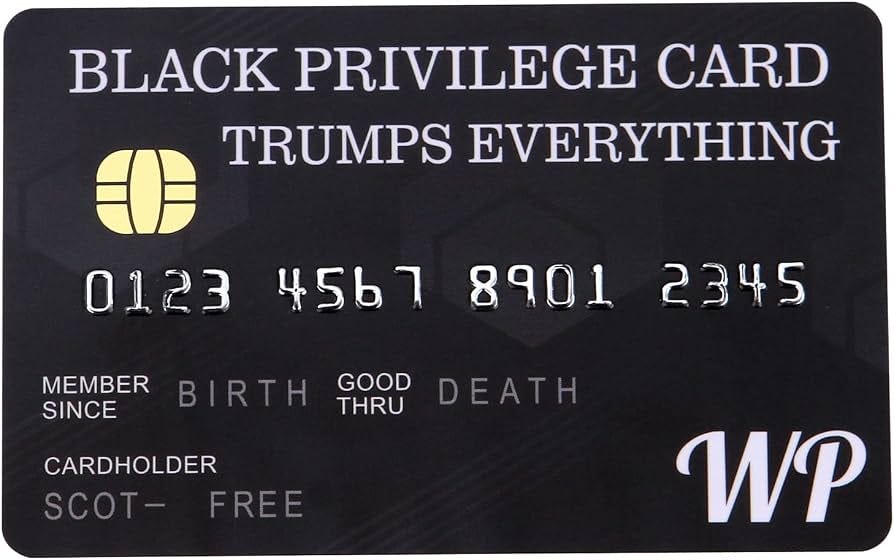
However, as my own experience with and Browns comments about black crime show, those who do engage in criminal behavior are nevertheless aware of the that patronizing attitude and are willing to use it to their advantage as a “get out of jail free” (i.e., avoid responsibility) card.
Again let me reiterate, I and other retail businesses have historically dealt with shoplifters of all races, ages and sexes, but only when it comes to black criminals are customers and large swaths of society willing to make excuses for those youths who come into the store, make a lot of noise, make a mess, swear at the workers, and walk off with any number of items. And in my case, being threatened by a 12-year-old boy for telling him not to use our wheelchair if he didn’t need to (which I also appreciate was probably part of the “distraction” element of the originally intended property crime).
To me this sort of entitled thievery amounts to what should rightly be called, but which you are not allowed to say in polite company- Black Privilege! And while I will not argue the existence or extent here of “white privilege,” as someone who is regularly at receiving end of some of the most egregious and entitled behavior from black youth, I would contend that the notion of black privilege is far less an academic-ideological construct and is far more grounded (albeit subjectively so) in reality than white privilege.
Perhaps it is time to stop having our feelings and intelligences gaslit by the threat of being called racist, and to call (but only when warranted) such criminal behavior as it is— black privilege—a term we should be using much more frequently.
Photo Credit- CBS News, Tik Tok, YouTube and Amazon.
I spent a goodly portion of my career in Loss Prevention. The last time I worked at store level, it was a big-brand athletic company, in a large-ish city on MLK Blvd, and when school let out, the morale of the store dropped as the predictable would happen and everyone was on high alert to try to stem the flood of merch leaving the store unpaid. One could say everyone was fatigued...
The irony was this was a "community store" where a portion of the profits went back to the community, but it closed due to the rampant loss caused by said community
It would just be nice if we could have honest conversations in America today about causal effects that genuinely aim at addressing real problems. This applies to so many facets of our society today.