

Are the Unborn People?
The pivotal point upon which the abortion debate turns is not whether abortion itself is right or wrong, but whether the unborn are "persons."

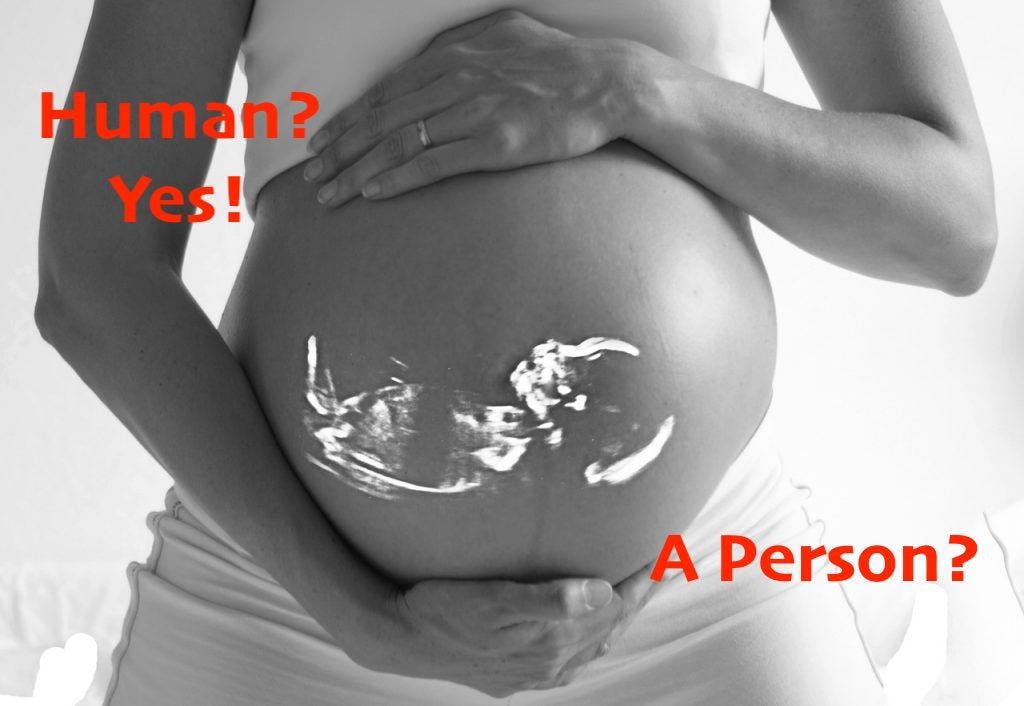
In general, it seems that people are quick to proclaim that “words matter” and that logic and science are key, except when it comes to certain issues. On the topic of abortion, many have attempted to argue, despite clear science and logic, that because the subject is not specifically addressed within our founding documents, the right to life for those who are unborn is not an absolute certainty (i.e., in some cases a babies “right to life” appears to currently depend, inconsistently, on whether the child is “wanted” or “unwanted”). Similarly, there are Christians who argue that because the term “abortion” is not found in the Bible, God’s intent on this matter is somehow neutral or unclear—thus conveniently leaving us to decide this matter of profound importance for ourselves as to what is right versus what is wrong. Such an approach is disingenuous, intellectually dishonest, and illogical, for subjects that might appear to be unaddressed in the first instance can easily be illuminated by other issues and with reference to other information.
Are the Unborn People?
The choice of words that were purposely selected for use in the Bible are important. And in a world full of shifting truths and changing definitions, the words and pages of the Bible have remained—and will remain—unchanged (Jesus Christ is the same yesterday, today, and forever (Hebrews 13:8). But not every practice/topic is addressed, and the Bible does not claim to answer all of our questions. There are many mysteries that surround us which will unfortunately remain unanswered until the end of time. The topic of abortion, however, is not one of them. That is because the answer to a much bigger primary and fundamental question, whether the unborn are “persons” or “people,” has been shared with mankind. Although some Christians claim the status of personhood for the unborn to be unclear, the Bible makes an important—but not very well known—Old Testament reference at the end of Psalm 22 (in verse 32):
“The generations to come will be told of the Lord, that they may proclaim to a people yet unborn the deliverance you have brought (emphasis added).”
Even though this passage does not, as some would prefer, specifically declare verbatim that “the unborn are people,” it leaves little room for doubt. Although the wording could easily have referenced “future generations” instead of “a people yet unborn” (as most of us probably would have written it), an intentional choice was made in this passage to highlight the unborn as “people,” thereby making its meaning sufficiently clear.
It is also important to note other terms that the Bible does not use in reference to the unborn. For example, this specific passage does not refer to:
entities;
spirits;
organisms (or future organisms);
“products of conception, a medical term that is currently in use (or future “products of conception”);
clumps or groups of cells (or future clumps or future groups of cells);
almost people (or future people);
non-persons;
the non-living or the non-existent;
soon-to-be-people, or anything else that would leave doubt as to their status as persons.
(note that the issue goes even deeper, for while we as human beings think of the unborn as beginning to exist at conception, because God is not bound by space and time, it is likely that our Creator thinks of us as people even prior to our conception (see for example Jeremiah 1:5: “Before I formed you in the womb I knew you” (emphasis added), meaning that all past, present, and future generations are considered as “people” to God).
The Unborn ARE People…
Once there is agreement confirming the unborn as persons/people, there is no further need to discuss the rightness and wrongness of abortion (even the Supreme Court justices in the majority opinion of Roe v. Wade acknowledged that “If…personhood is established…the fetus’ right to life would then be guaranteed…”). That is because whether you refer to religious law or secular law, the answer is the same: human beings should not intentionally kill other innocent people (most particularly their own offspring).
Even if you disagree with Psalm 22 as providing Biblical confirmation of the unborn as people, there are still other Bible passages which support this same conclusion. For example, Deuteronomy 30:19 instructs: “I have set before you life and death, the blessing and the curse. Choose life, then, that you and your descendants may live.” This command from God should be quite clear, as well as quite obvious, given the opposite would involve choosing to end life so that your ancestors will perish. In other words, even without the wisdom of Psalm 22, this additional passage should be sufficient for Christians to answer the abortion question.
No Surprise
Given what we know about the Founders of our country, it should also not be any surprise that the logic found at the end of Psalm 22 (and similarly in Deuteronomy 30:19) mirrors the logic of our Declaration of Independence, which is based on unwritten Natural Law and states that “all men are created equal, and endowed with certain inalienable rights (emphasis added).” The logic of this statement makes clear that there is no requirement to be born and to be living outside the womb in order to receive our fundamental rights (in particular our most important right, the “right to life”). In other words, in the eyes of God we are all inherently considered to be persons prior to our actual birthdate.
Making the Right Decision
Despite the clarity of the language contained in the Declaration, we unfortunately continue to debate “personhood” for the unborn under U.S. constitutional law from an abortion perspective (even though the law considers the unborn as persons in other cases, such as the murder of a pregnant mother). The Biblical position, on the other hand, is entirely clear, regardless of those who insist on pretending otherwise. Admittedly, however, accepting this truth does not end the matter, for even after confirming what is right and what is wrong in the eyes of God, His gift of free will still permits us to choose to do whatever we want (as discussed in Sirach 15:11).
This fundamental reality is precisely why we must make the right decision, for each life that begins—and each person that comes into existence—is proof not only of the Father’s will, but of His great, wonderful, and mysterious plan for humanity.
Photo Credits- Public Discourse, hprweb and Daily Christian Content.
This is the best summary of the argument I’ve read in a long time; indeed, perhaps the best summary of the crux of the issue l’ve seen yet. More l’m tempted to add, but that is enough to start. Excellently done.
Good article. Might I suggest for further reading, JPII's "Theology of the Body"? Or, if you just want an appetizer, Christopher West's "Theology of the Body for Beginners". I promise you'd find this to be a fascinating supplement to the road you've already endeavored to traverse here. God bless you, sir.