

Why the Church Doesn't Change
We recently passed the one-year anniversary of Pope Leo XIV's papacy and many have been wondering what has changed in the Church in that year. The answer is not much, and here is why.

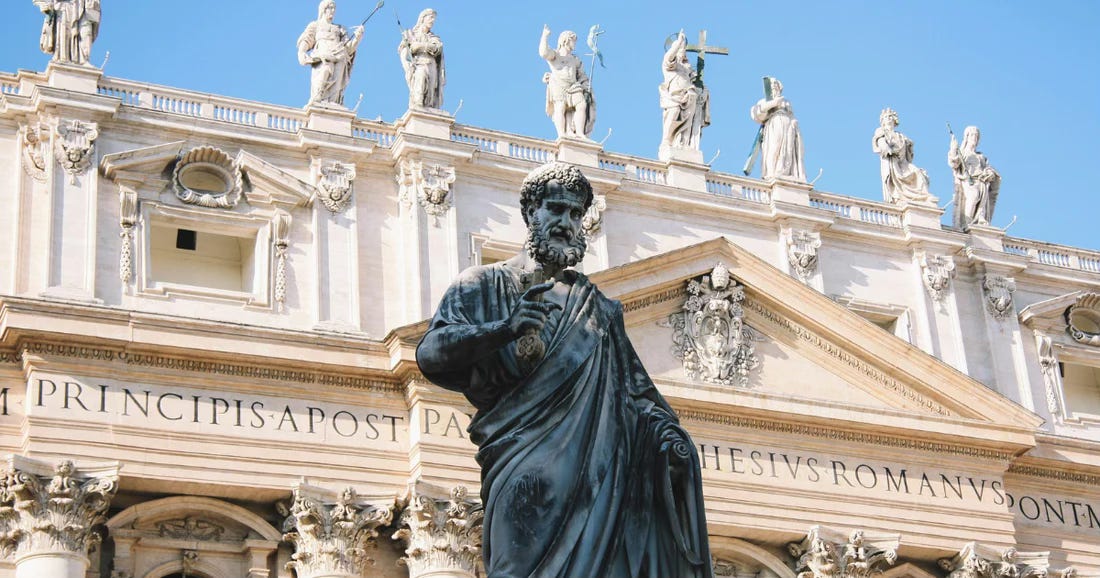
Individuals operating under the banner of “progress” or “change,” not just in the U.S. but worldwide, have for many years been meticulously advancing their ideology. At the same time, large numbers of citizens remain apathetic, or are simply too focused on their daily lives to notice the impact. The result has been a significant weakening of core institutions and traditional/orthodox ideas. However, one institution has remained largely intact: the Catholic Church.
Progress/Progressivism
Progressivism by its very name highlights progress, and the term incorrectly implies that all progress is inherently good. The fundamental flaw of progressivism is that it assumes that “change” and “progress” are the same thing. But all change is not progress, as the movement away from foundational “individual rights” to the more modern idea of “group rights”—an idea promoted by modern-day progressives—aptly demonstrates (to most of us).
In analyzing progressivism, the important questions to ask are: 1) what do progressives mean by the term ‘progress’?; and 2) to what exactly is it that they are progressing toward?
The term “progressivism” was first used in the 1850s (only a few years after the release of The Communist Manifesto in 1848), and in many of its iterations has aimed to achieve radical social transformation. It would eventually serve as a launch pad for many political, philosophical, and religious (as well as anti-religious) movements around the world. In America, progressivism would become the first mainstream movement to openly oppose principles that are contained in our country’s Declaration of Independence, such as the right to life, and the belief that all men are not merely “born” equal but instead are “created” equal (from the moment of conception).
Progressive Attacks on American Society
In the name of progress, there have been attacks over the years on institutions such as the education system/universities, the legal system, the media, political parties, government, and religion/churches. Throughout its history, progressivism has not limited its attacks merely to institutions, but has also waged war on certain ideas and concepts as well. Some of the more important ones include: respect for life (through abortion and assisted suicide), love of neighbor (by promoting tribal segregation into groups), self-sufficiency (through government dependency), marriage/family (through divorce, same sex marriage, and other strategies), and finally, culture itself (with attacks on the Founding Fathers and other historic figures).
All of the above institutions and principles have been gradually weakened over time. It is unfortunate to note that not a single one of them would appear to be stronger today when compared to the past.
Attacks on the Catholic Church
The Catholic Church is by no means immune to attacks. Calls to change the Church in the name of progress have been made throughout Church history. A relatively modern example is “liberation theology,” which in its contemporary version, was used in a Marxist sense by some in conjunction with the gospels in an attempt to wipe out personal sin and make capitalism the enemy. In spite of the attacks, the Church has continued to hold its ground. One thing that has helped the Catholic Church immensely is the creation of the Catechism of the Catholic Church in 1992 by Saint Pope John Paul II. It provides a detailed summary and explanation of core Church beliefs (thereby helping to eliminate confusion as to what Catholic’s believe) and is readily available to those both inside and outside of the Church via the Vatican website.
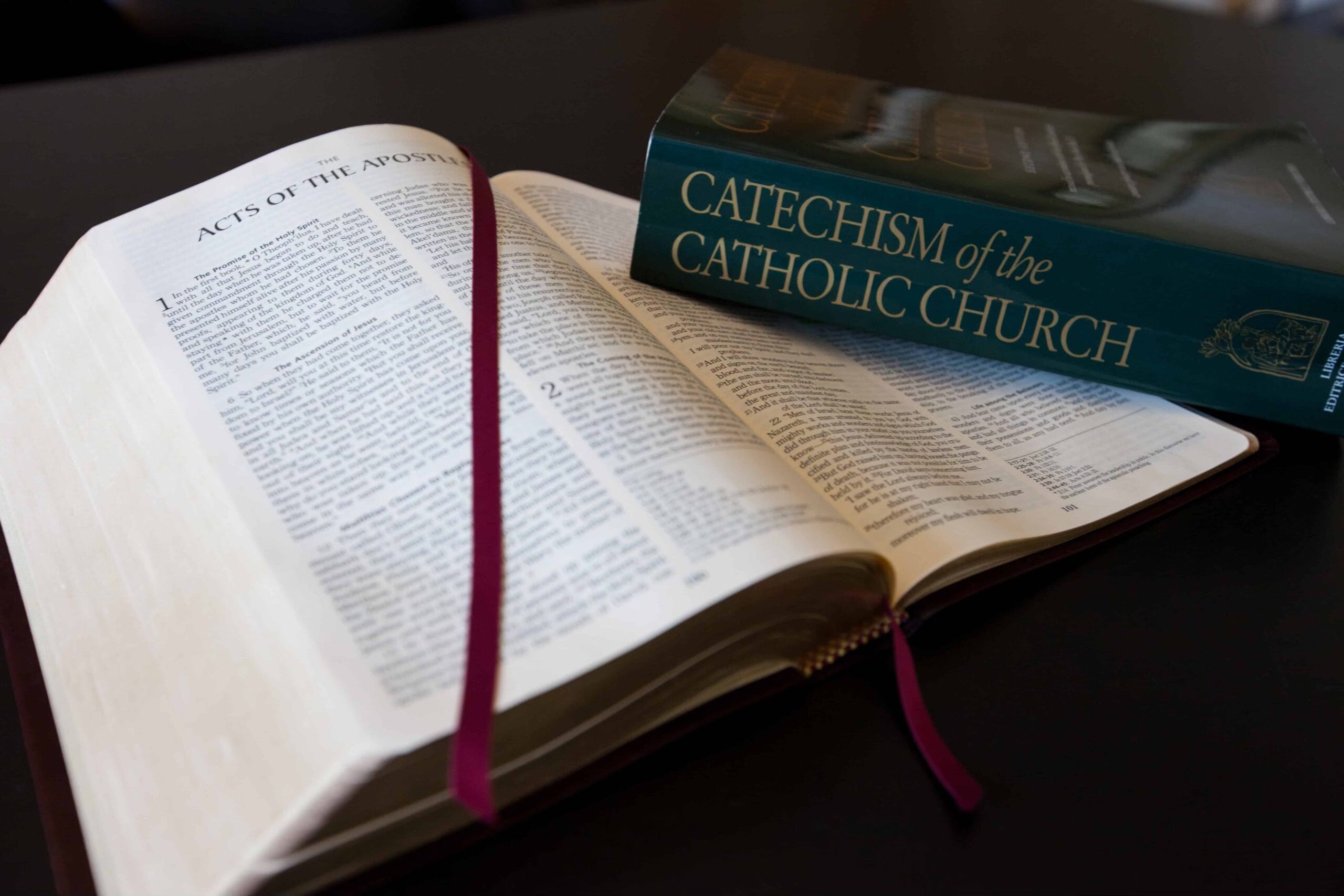
Because the idea of “progress” to Progressives involves a never-ending slow crawl, it is not always obvious to many individuals exactly to where it is that they are headed. Regardless of the stated goal, it is in fact possible to see the end result of unbridled progressivism simply by looking back at historical events, with one such example coming from the corporate/business world.
The End Result
I spent a good portion of my career working in Houston, Texas, where I was employed by a very old, conservative company that operated in the energy industry. My office was located just down the street from another well-known business, the Enron Corporation. At one point in time, Enron was doing quite well from a financial perspective by applying what were perceived as “contemporary” and “innovative” practices. This company received so much financial success within a short period of time that many employees chose to place most of their retirement savings into company stock. The argument was, why wouldn’t you put all of your retirement money into an investment that produces a significantly much higher-than-average rate of return?
Down the street at the business that I worked for, many employees began to grumble that we were being “left in the dust” due to the fact that company leadership refused to engage in similar (primarily energy trading) practices as Enron. Some of my fellow co-workers bemoaned that they were being led by ineffective leadership from an old, conservative corporation that were, for “no good reason,” reluctant to change company practices for the benefit of both employees and investors. At the time, this reluctance to change did not sit well with both the internal and external critics. The argument they made was essentially: someone else is having success doing these things, so why shouldn’t we?
But we all know how the story ends. The company that I worked for still exists today, and the other does not. As the example illustrates, sticking to historic core beliefs and fundamental practices over the course of time ultimately pays off.
The reward and the end result is simple:
Survival.
An Intentional Strategy
Ideas come and go (with some lasting longer than others, and some returning over and over again in different forms), but the Church takes her time in examining these new ideas and ideologies. The Catholic Church may be said to “change” over time, but it does not fundamentally change by altering its core beliefs. She takes the true, good, and beautiful parts of all ideas, and ignores the rest. Consistency is key. It is helpful to remember that the Church was not formed to promote mankind or to satisfy man’s worldly desires. If this were the case, its existence would ultimately be only temporary, just as in the case of all of the various “new” ideologies that have presented themselves to man throughout thousands of years of human history.

Conclusion
As the example above illustrates, the Catholic Church will continue to hold the line regarding its beliefs and traditions, given that the stakes are extremely high (to put it mildly).
Progress is not necessarily bad, but not all change is good. Progressive ideas will come and go (such as the version of liberation theology that is referenced above), with the pseudo-scientific practice of eugenics, a violation of human dignity that led to the horrors of Nazi Germany, serving as another important example.
Traditional Biblical and Church principles do not (and therefore should not) change. It is therefore self-evident that by maintaining a commitment to the faith, tradition, orthodoxy, and the Word of God as presented in the Bible, the continued existence of the Catholic Church will necessarily be guaranteed.
Photo Credits- Ascension Press, The Catholic Thing and Pinterest.