

The Wikipedia Strategy- Part 2
As noted in an earlier article, it is well-known that Wikipedia has a left-wing bias. Here is more proof using the entry for Archbishop Fulton Sheen, which ignores his anti-communist views.

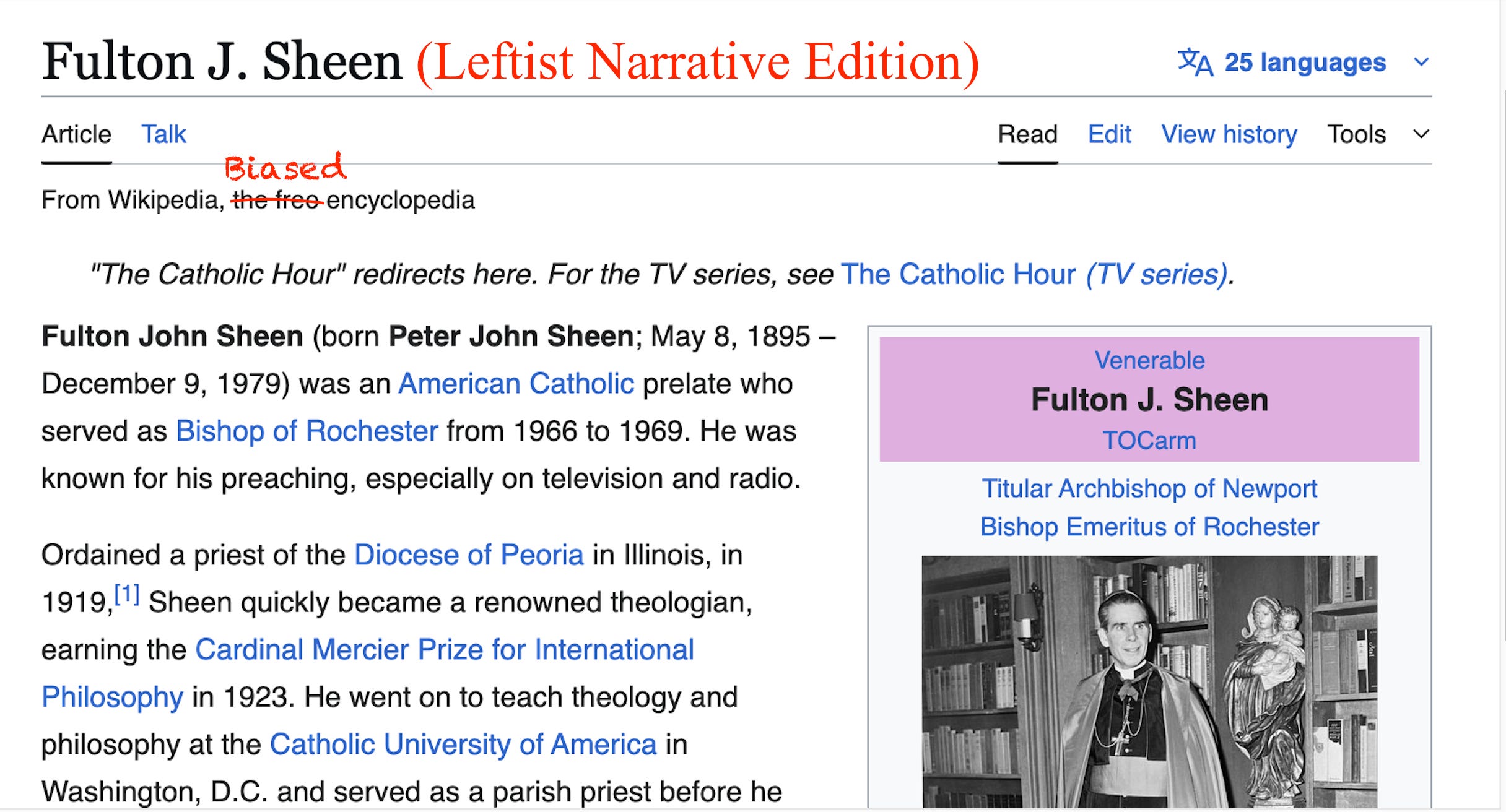
Founded in 2001, Wikipedia identifies itself as a free, multilingual on-line encyclopedia written and maintained by a community of volunteer contributors. While on paper, its policy appears to be both fair and democratic, the key reality is that the company has the final word on and control of its content. Operationally, an army of administrators and editors ensure that information is presented in a way that supports the corporate “strategy.” It is irrelevant that almost anyone can contribute to the narrative; what matters is Wikipedia’s ability to maintain compete control of the “message.” While the exact motive of the management team is unclear, the ideological bias that flows through Wikipedia’s on-line pages necessarily speaks for itself.
Another Example
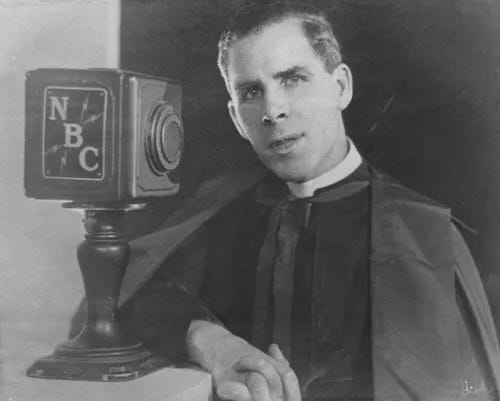
Part one of this article presented an example of Wikipedia’s bias. While there are many more instances of its left-leaning positions to highlight, Wikipedia’s description of (Venerable Archbishop) Fulton J. Sheen provides another example to illustrate this point. Fulton Sheen was a deacon/priest/bishop/archbishop, author and television personality. His renowned and inspiring television series Life is Worth Living was watched by millions of viewers from all walks of life and from different religious beliefs. However, what some may not know is that Sheen, while a man of God, was also profoundly anti-Communist. One of his best-selling books, published in 1953/54 and of the same name as his television series, provides a statement of Sheen’s philosophy of life and living, where no less than three chapters are devoted to critical thoughts on Communist ideology.
How the Strategy Works
The well-planned and carefully crafted strategy that is subtly employed on Wikipedia operates as follows:
Start with an important person or historical incident with a belief or message that the Left finds unflattering or inconvenient (in this case, Fulton Sheen and his anti-communist beliefs).
In the summary first paragraph, ignore any negative thoughts that are connected to Leftist ideology, particularly Marxism or Communism.
In the main body of the entry, ignore important and significant factual truths and seek to provide or imply an alternative explanation to the “unflattering” critical belief or beliefs. In order to be successful, it is important that the “explanation” contain at least some element of truth.
Include correct facts in the body of the entry, even though they might be negative from the perspective of the Left, so that when anyone questions Wikipedia’s description it can be pointed out that the entry contains “accurate” information.
The summary paragraph of the Wikipedia entry for Wikipedia for Fulton J. Sheen describes him as “an American Catholic prelate” who was known for his “preaching,” “especially on television and radio.” While this description is generally accurate, you will also notice that both the summary and the main body of the Wikipedia entry for Sheen contain no mention of the fact that the probable future saint had any negative thoughts or beliefs regarding Marxist/Communist ideology.
The Fulton Sheen Summary - Step 1
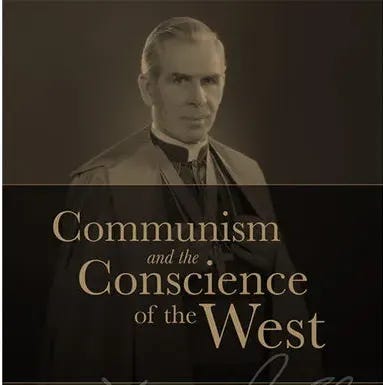
As described above, the first element of Wikipedia’s deception strategy involves an omission of facts, coupled with efforts to avoid any negative reference to Marxism or Communism. This is despite the well-known anti-communist positions that Fulton Sheen held. Specifically, Sheen viewed Communism not merely as an economic or political threat, but rather as a dangerous spiritual and moral crisis. He was against Communist ideology because it denies the existence of God, and because it seeks to control every aspect of human life and replace it with the state. Examples of Sheen’s anti-communist positions can be found in his best-selling book, Life is Worth Living. A few of them are displayed below:

(In describing Karl Marx) “It is easy to understand how a man who never earned his own living, but survived through the aid of others, should so readily develop a system of economics based on the dispossession of others.” (p. 238)
“As Hitler put the emphasis upon race, as Mussolini put it on the nation, so the Communists put it on a revolutionary mass.” (p. 57)
The Communist error is to believe that if all people share the same property, they will therefore be brothers. This is a grave fallacy; sharing the same apple does not make men brothers…” (p. 95)
“Communism has bootlegged and smuggled into its system the decency and morality that have come from the great Hebraic-Christian tradition of the Western world and then uses it to pass judgement on the world.” Moral indignation is needed against injustice, but Communists have no basis for using it (p. 56)
“Communists are right in saying this world needs a revolution, but not their cheap kind, which merely transfers booty and loot out of one man’s pocket into another’s.” (p. 58)
The Communist revolution has been a basic failure…it leaves hate in the soul of man.” (p. 58)
“Communism destroys human freedom.” (p. 242)
We must recognize the evil of this Communist philosophy and begin affirming, in the United States, the worth of a person as a creature of God.” (p. 57)
None of this information can be found anywhere within the Wikipedia entry for Sheen.
The Fulton Sheen Summary - Step 2
The second aspect of Wikipedia’s strategy involves attempting to alter the truth, specifically by suggesting that Sheen had personal issues with individuals or nations, rather than with Leftist ideology in general. For example, the Wikipedia entry, while making no specific reference to Marxism and Communism, provides the following rather limited information in a relatively short paragraph that is hidden within the “Media Career” subsection that describes Fulton Sheen:
“…he forcefully denounced the Soviet Union.”
He once stated that “Stalin must one day meet his judgement.”
That is it. In addition, Wikipedia’s entry for Sheen makes no reference to Leftist ideology, or to Communism or Marxism specifically.
But Why?
So why the contrived effort to avoid mentioning Fulton Sheen’s very strong and very public anti-communist beliefs? The simple answer is that if an exceptional man such as Sheen—and a likely future saint—were associated with this position, it then makes it difficult to market and sell Communist/Leftist ideology to the masses (and in this case, to Roman Catholics specifically). But why then permit language that indicates Sheen was critical of Josef Stalin, who was a man of the Left? The simple answer is that it deceptively implies that Sheen’s issues were personal issues that he had regarding individuals (i.e. Stalin), and not with Leftist ideology in general. And what about the entry allowing critical thoughts on the former Soviet Union? The answer is the same; it deceptively implies that Sheen had issue with a particular nation, and not with Marxism/Communism in general.
But if the Left-leaning management at Wikipedia has complete control of the information that is presented on its site, why would they allow any language that is critical of the Left? Does that make sense? The clever answer is that including at least some accurate facts in at least one place throughout the lengthy entry allows Wikipedia to claim that their information is correct, which then allows them to label any of their critics as “paranoid” or “delusional” for suggesting that the entry is inaccurate or in any way deceptive.
(As a side note, while Sheen was a strong advocate for the sanctity of life and was opposed to abortion, the Wikipedia entry also—unsurprisingly—makes no reference to his Pro-life advocacy and/or his opposition to abortion.)
How to Respond
The historical record is clear that Fulton Sheen was anti-Communist (and was also strongly Pro-life). But regardless of this truth, the strategy of using incomplete information that is routinely employed by Wikipedia is actually quite effective—and continues to work in this case—because many people still tend to assume accuracy and comprehensiveness from Wikipedia.
To confront this deception, it is important to remain aware of Wikipedia’s inherent bias, and to be informed of the facts. Going forward, if you make use of the platform for specific details, be skeptical of the information found in each and every entry. Specifically, make sure to be on the lookout for incomplete information, which will necessarily require you to conduct additional research (in this case consider referencing various Catholic resources, given that Sheen was Catholic). As a general rule to follow going forward, remain skeptical, ask questions, consult other sources, and finally, when you are done, share your conclusions with others.
Photo Credits- EWTN, Celebrate Sheen, and the Catholic Gift Store.
Alas, you use facts, deployed with reason.
Both of those characteristics are anathema to the "progressives."
Nice work, Brad. You should do a similar one on the preprogrammed bent in AI responses.