

The Quintessential Gray Hero- Remembering Val Kilmer and His Best Roles
Val Kilmer played many roles during his career, but his best roles were those characters which are not the indomitable alpha male action hero or the buddy-beta sidekick, but the sigma grey hero.

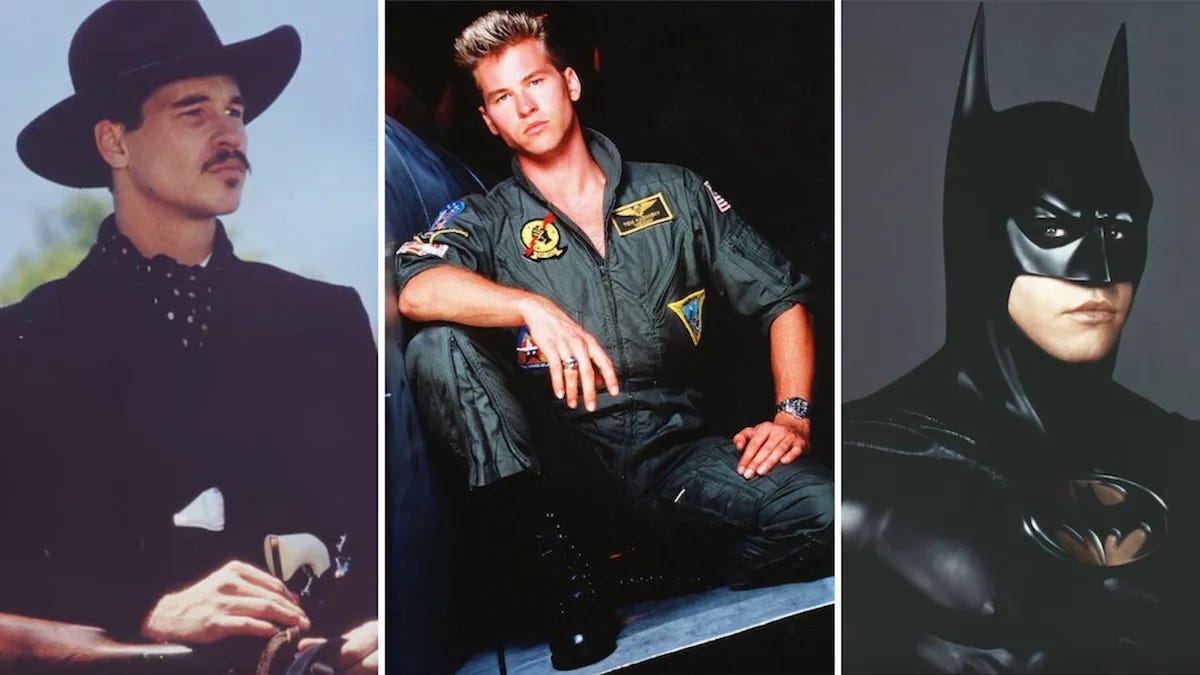
After struggling with persistent health issues since he was diagnosed with throat cancer in 2017, actor Val Kilmer died on April 1st of pneumonia. Beginning with his first starring role in 1984 in the ribald comedy Top Secret, Kilmer’s career in film, television and stage spanned over forty-one years with his last cinematic appearance being a reprisal of his iconic role of Tom “Ice Man” Kazansky in 2022’s Top Gun Maverick. During his long career he portrayed characters that an entire generation (mostly Gen X like myself) of movie goers still remember to this day, such as the laconic but smooth talking “Ice Man” from the original Top Gun (1986), “Batman/Bruce Wayne” in Batman Forever (1995), where he was not nearly as brooding as Michael Keaton and not as campy as George Clooney, and of course, “Doc Holiday” in Tombstone (1993), from which we get his famous line, “I’m your huckleberry” that is still remembered and repeated today.
His Roles
Although Kilmer has played many roles throughout his career, in my estimation his best roles have been those characters which are not the indomitable alpha male action hero or the buddy-beta sidekick, but the taciturn sigma male. His most memorable characters were ones who are at odds with, or who reside in, the peripheries of the worlds they inhabit, but who nonetheless go about their business (sometimes stoically and sometimes humorously) to resolve the story’s conflict. As former film critic Roger Ebert once quipped, “If there is an award for the most unsung leading man of his generation, Kilmer should get it.” Some of those roles would include,
“Chris Knight” from Real Genius (1984)
Kilmer played a genius physics student who discovers that the science project he has been working on at his university is a CIA-sponsored assassination laser. So he, and another genius teen named Mitch, fight back in their own Gen X slacker fashion.
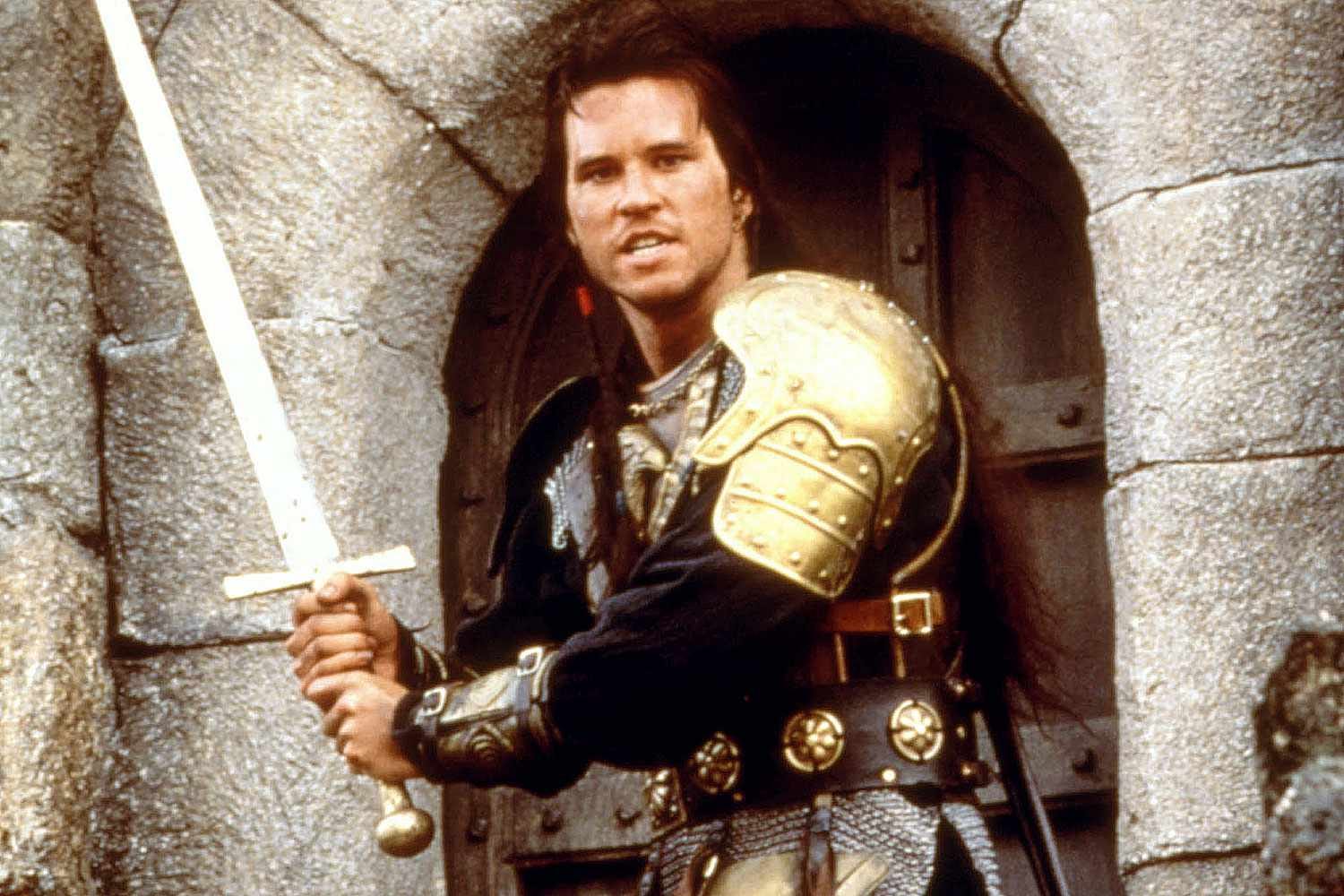
“Madmartigan” from Willow (1988)
Kilmer played a former soldier, shunned by his former comrades, who has fallen on hard times but eventually joins forces with a Nelwyn named “Willow” (Warwick Davies) to save a baby and overthrow an evil sorceress queen.
“Ray Lavoi” from Thunderheart (1992)
Kilmer, an FBI special agent with Sioux ancestry, is sent to the Pine Ridge Indian Reservation to investigate a crime. He crosses swords with but later comes to respect the local tribal policeman, Walter Crowe Horse (Graham Greene). Together they discover that the whole investigation is a “mop-up” to resolve local corruption and to pacify certain residents.
“Chris Shiherlis” in Heat (1995)
Yes, Kilmer was an anti-hero in this film as a long-haired criminal who works with a crew of ruthless bank robbers. Aside from having one of the most intense shootouts in movie history, somehow director Michael Mann gets the audience to see these crooks as tragic figures who “do what they do” to make a living by delving into their lives. Kilmer’s character is the only one of the crew who survives at the end.
“Simon Templar” from The Saint (1997)
Kilmer plays another anti-hero here, an international high-tech thief who uses various aliases named after Catholic saints. He gets involved in stealing a microchip containing a formula for clean nuclear energy, all the while avoiding death from post-Soviet Russia oligarchs. In the end he saves the day and anonymously donates the stolen money from the oligarchs to various charities.
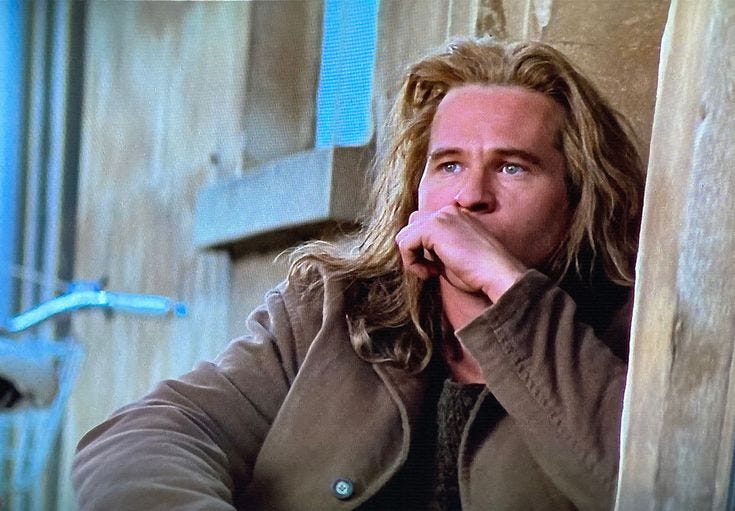
“Virgil Adamson” from At First Sight (1999)
A curious story that is a mix of the miracle of the Blind Man of Bethsaida (Mark 8:22-26) and neurologist Oliver Sacks’ book An Anthropologist on Mars. Kilmer plays Virgil, a man who was blind since childhood but regains his sight through a novel surgery. However, the story’s conflict revolves around Virgil’s attempt to learn how “to see” and comprehend the world around him, such as learning to read people by sight. A touching but tragic love story where “sight” is a metaphor for facing and dealing with life’s struggles.
While all of these films are excellent, if you were to ask me what my favorite Val Kilmer movie is, I would not hesitate to name one of his lesser-known films that I have always enjoyed and found inspiration in.
The Ghost and the Darkness
This 1996 film is set in Africa during the late nineteenth century as the European empires seek to colonize Africa. Kilmer plays Lt. Col. John H. Patterson, an Irish engineer in the British army who has been commissioned by the autocratic and ambitious Robert Beaumont (Tom Wilkinson) to get the construction of a bridge in Kenya back on schedule. Saying goodbye to his pregnant wife, he arrives at the work site and is confronted with a conglomeration of workers from different cultures and religions, whose petty animosities are only barely kept in check by the imposing personalities of the three foremen representing each of those groups.
On his first day there he is told by the camp's doctor, David Hawthorne (Bernard Hill), that a “man-eater” or lion attacked a worker that day and he wants to know what he's going to do about it. Patterson says he will “sort it out” and kills the lion that very night. However when the camp's strongest foreman, Mahina (who himself killed a lion in his youth) is dragged from the camp one night and killed, Patterson realizes that there is another lion afoot. Or rather, that there are two lions in the area which the workers dub “the Ghost and the Darkness” believing them to be two demonic spirits.
As Patterson attempts to kill the two lions, he must argue with the workers who refuse to work after more than sixty men have been killed by the lions, and at the same time put up with Beaumont’s demands to get the bridge built. Soon professional hunter Charles Remington (Michael Douglas) and a cohort of Masai warriors arrive to help out, as he and Patterson get do their best to hunt the lions. Yet when the lions outwit the two on more than one occasion, and after Dr. Hawthorne is killed, all of the workers eventually flee the camp. With only Remington, Patterson and a foreman named Samuel left, the two set out to eliminate the lions. After killing one of them, the two track the other but find a cave filled with piles of human bones, thus hinting at a potential supernatural element.
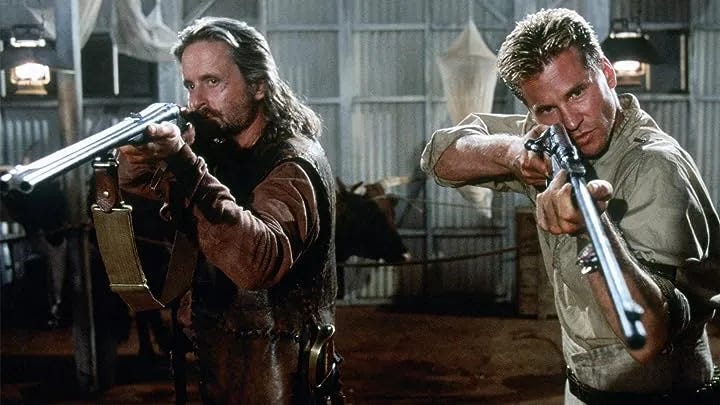
That night Remington is taken by the remaining lion and dies. Patterson and Samuel, frustrated but not cowed, lure the lion in for one climatic fight that beggars belief, but in which the lion is eventually killed.
The film is loosely based on the 1907 book The Man-Eaters of Tsavo, with the History Buffs channel offering a factual (but still fascinating) breakdown of the film. The film ends with a true historical note, mentioning that after the bridge was finished, the railroad came through and the age of empires continued on. In the end, Patterson’s heroic stand ends up being nothing more than a local tale in the grand scope of history.
A Solid Film and an Enduring Story of The Gray Hero
The Ghost and the Darkness is a fantastic film, and especially for men, as it exemplifies so many of the curses and crosses that fill their lives. For one, it is a fitting example of a line from Rudyard Kipling’s iconic poem “If” about what it means to be a man: “If you can keep your hair when all about you are losing theirs and blaming it on you.” Time and again, Patterson and Remington must deal with their frustrations, fears and failures because of either the ambitions or incompetence of the people around them, all the while maintaining their poise and professionalism.
Secondly, it is also a classic story of man against nature, as found in such books/films like The Old Man and the Sea, Hatchet, Jaws, The Revenant or The Life of Pi. These tales present an enemy which is not just another mind or mensch to contend with, but rather an amoral world or creature to struggle against. These conflicts leave the hero alone with his own thoughts and sense of self in the face of danger. As St. Josemarie Escriva once wrote,
“The person with fortitude is one who perseveres in doing what his conscience tells him he ought to do. He does not measure the value of a task exclusively by the benefit he receives from it, but rather by the service he renders to others. The strong man will at times suffer, but he stands firm; he may be driven to tears, but he will brush them aside. When difficulties come thick and fast, he does not bend before them.” (Friends of God, 77)
Finally, and most enduringly, Kilmer’s role in The Ghost and the Darkness is a perfect portrayal of the Gray Hero. The name is based on a character from Nathaniel Hawthorne’s 1835 short story “The Gray Champion” in which an imperious royal governor parades around in 1689 Boston to intimidate its citizens. From out of nowhere, a man in gray Puritan garb appears and confronts the governor and portends his downfall before disappearing, departing as abruptly as he appeared.
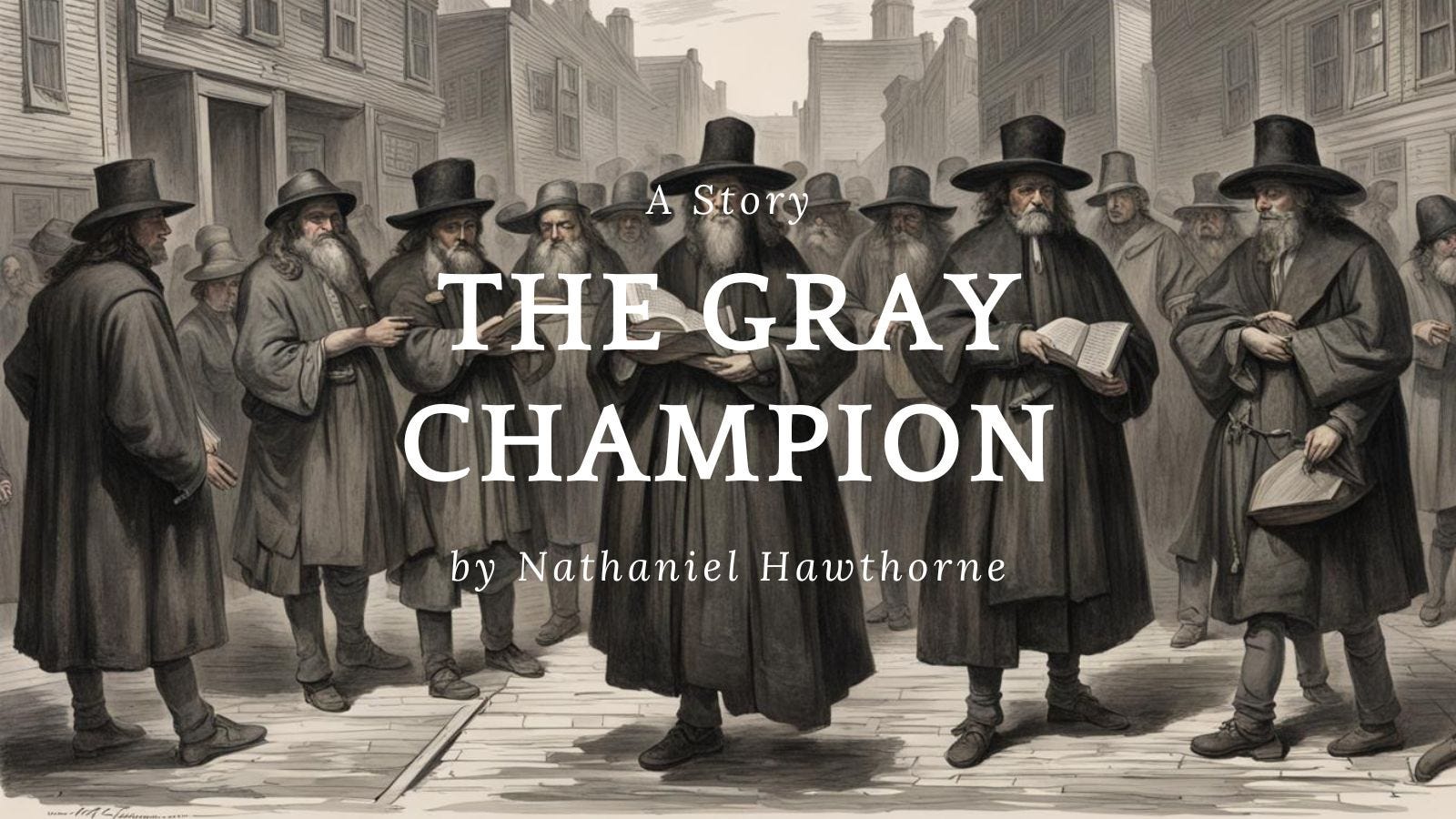
The “gray champion,” or the gray hero, is one of two perennial hero story arcs which authors Neil Howe and William Strauss mention in their 1997 book The Fourth Turning: An American Prophecy. There is the one that we are all familiar with, the tale of a young hero with his elder mentor (think Luke Skywalker and Obi-Wan Kenobi, or Harry Potter and Albus Dumbledore) who wage an epic struggle against evil to usher in a new religious or social order. Then there is the less common “nomad” character arc which take place, not in at time of ascent, but during times of decline or unrest. They are not about epic socio-political or religious struggles, but personal ones where a flawed sigma hero, for whatever reasons, willingly heads out into the dark places of the world to battle evil so others may live in peace and safety, fully aware that few if any will ever hear of their exploits.
These are the tales of heroes who live in the muted world between black and white, which is why they are gray. In fact, we know plenty of examples of these fictional characters, all of whom had the word “gray” attached to their name: Gandalf the Gray (the Grey Pilgrim), Benjamin Martin from Patriot (the Gray Ghost), Josey Wales from the Outlaw Josey Wales (the Gray Rider), and John Ottway which was Liam Neeson’s character from the 2011 film entitled (appropriately enough) The Grey.
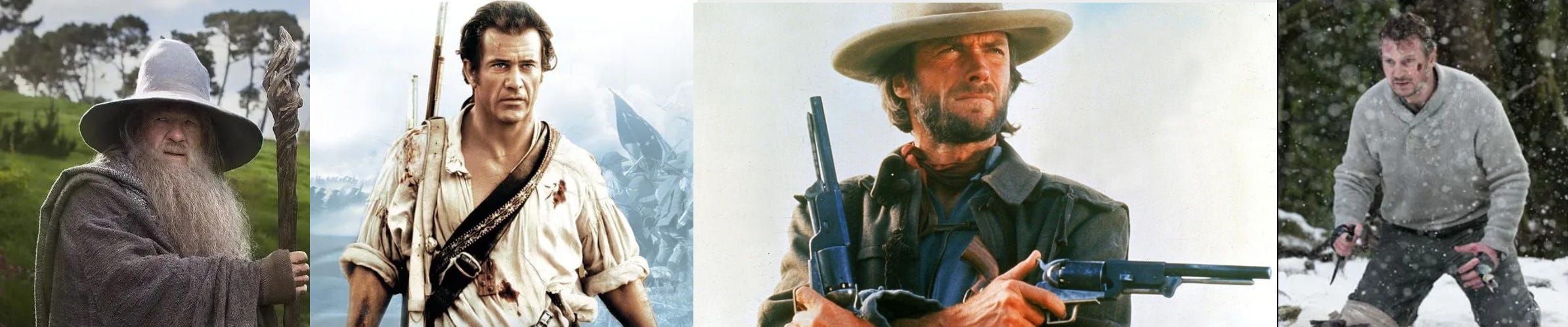
These are the kind of hero tales that most of us (Gen X and Millennials) can relate to the most, since most of us are aware that we will never be the ones to achieve the kind of fame and fortune that will be written into history books. Instead, most of our stories will be like Patterson’s in that they will be relegated to local legends or written about in obscure books that sit unread on library bookshelves (that is until a movie producer finds it!). They are the “grey” tales of ordinary and flawed men who rise up to do the dirty, dangerous and thankless task at hand with or without the expectation of praise, honor or reward.
In my opinion Val Kilmer excelled in these kind of roles. So let us remember him for those roles, as well as his own life and struggles, which he stoically endured to the end.
R.I.P. Val Kilmer (1959-2025)
Photo Credit- Consequence. net, Entertainment Weekly, Pinterest, The Cinemaholic, Every Writer’s Resource, Reddit, ScreenRant, Empire, and IMDB.
Doc Holiday (Kilmer) never said, “I’m all you’re huckleberry.”
I am all you are huckleberry? That makes zero sense.
If you’re going to quote such an iconic line you’re obliged to quote it correctly.
“I’m your huckleberry.”