

The Good Samaritan vs. DEI
All too often the Parable of the Good Samaritan has been used by some Christians to support their own Woke/Leftist worldview. But are they right to do so?

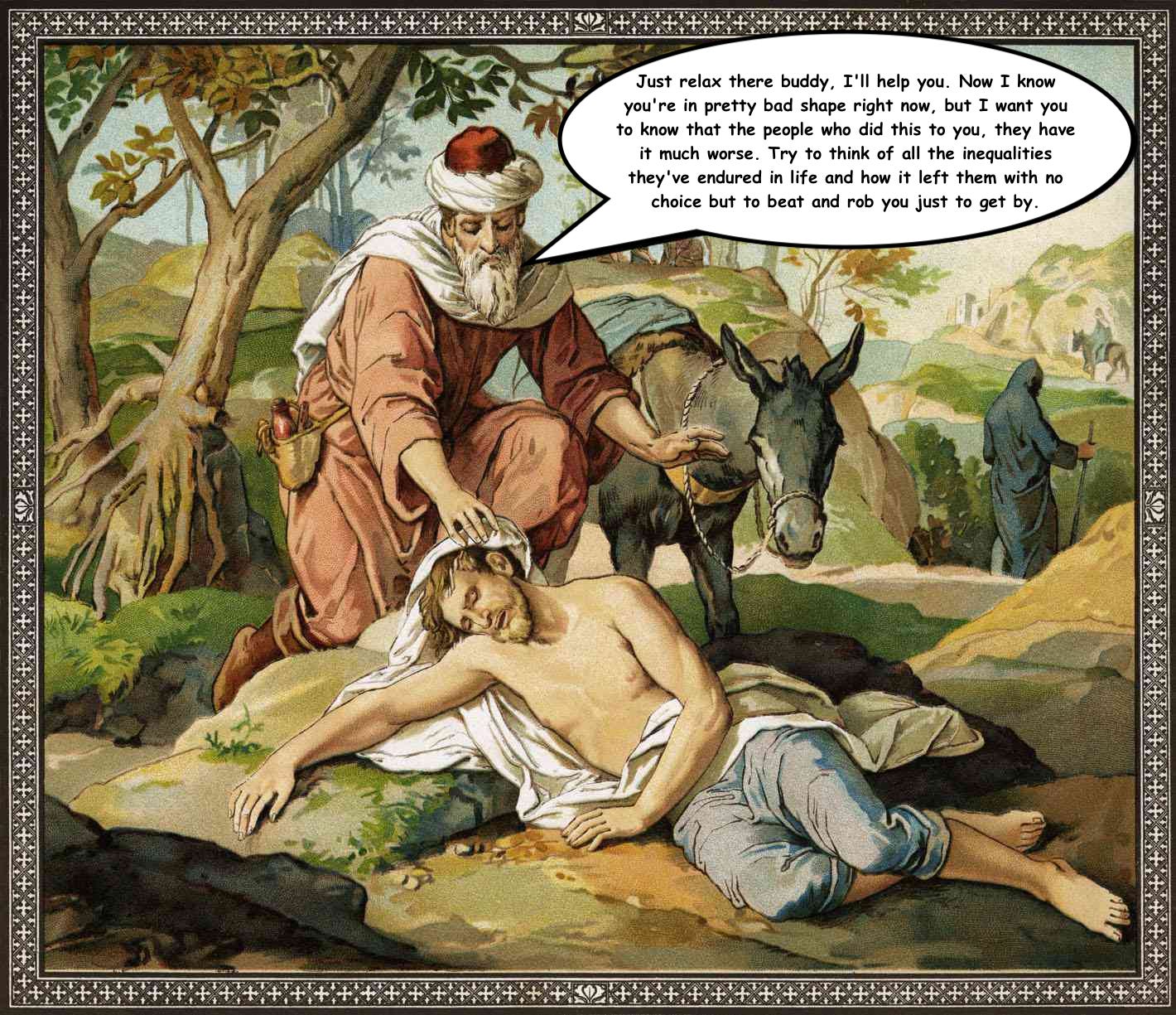
The story of the Good Samaritan is probably Jesus’ most famous parable. If you know the basics of the context for this story, you know that Israelites and Samaritans had been at a long-standing enmity with one another. The Assyrians had conquered the Samaritans centuries before, and as a result of intermarrying, lost their Jewish identity. The Samaritans ultimately fell into pagan idolatry and were hated by the Jews for it (to be fair, we know that the Jews also struggled with pagan idolatry from time to time).
During Jesus’ time, it was believed by the Jews that their exile into Babylon for four hundred years was seen as God’s judgment, and they—understandably—wanted to avoid that from happening again. Thus, the time of “Second Temple Judaism” is marked by a high regard for obedience to Hebrew Law and a heightened focus on purity. Samaritans, seen as impure, were therefore to be avoided.
So when Jesus makes the Good Samaritan the hero of this parable, and the Levite and priest combo the heel, he is packing a rhetorical punch. He is upending social norms. He is praising the underdog, which makes Jesus a perfect candidate for being used for the boilerplate leftist tropes of our day. Jesus celebrates diversity. He derides institutional power. He champions the underclass.
While there is some truth to these sentiments, recall that Jesus does levy serious criticisms towards the legal and political leaders of his day. He has concern for the poor, and he loves sinners and tax collectors. So is Jesus a good exemplar of what we understand to be the concept of Diversity, Equity, and Inclusion in our own day? The parable of the Good Samaritan might possibly indicate as much.
Context is Everything
There is only one problem with such a conclusion: while the Samaritan is indeed the hero of this story, it is important to note what he actually does. When the under-privileged Samaritan comes upon the oppressor class, what is his response? And applying a modern day DEI framework, how should he have handled the situation differently?

In the parable, the Samaritan serves the Israelite that is left for dead by generously giving him medicine, transporting him, and paying for his respite at an inn for several days. He does not use grievance politics to justify ignoring the man and instead serves him. Upon learning that his rescuer was a Samaritan, one can imagine the kind of impact that act of kindness would have had on the beaten man and on his community, and after hearing that his own people did nothing to help him.
To be clear, this parable is an example of the “oppressed” serving the “oppressor.” This fact then makes it difficult for this story to be used as paradigmatic for any of the grievance politics that we hear repeated today.
DEI, after all, is rooted in the deadly sin of envy. Equity, as is preached by the Left, is about recognizing inequalities of property or privilege and attempting to “level the playing field.” That can’t happen unless the oppressed class rises up, unites, and overturns their oppressors.
But that isn’t what happens in this passage at all. It turns out that Jesus is not sympathetic to the excuses of oppressed/oppressor language. In Jesus’ ethics, the oppressed still serve the oppressor. That fact, if properly understood and appreciated, should undoubtedly leave a mark on every leftist Christian’s worldview.
Am I saying that Jesus’ ethic is one where the underclass must serve the oppressor elites? Is Jesus a protector of the Status Quo? Of course not! Jesus himself serves his apostles by washing their feet and says that that is how the world is to know of their love. So we should all understand that no one - no one! - is above the most humbling service to anyone.

The point is that, in Christ, we all serve one another. The neighbor in the parable is the one who shows mercy. In other words, grievance politics cannot exist within Jesus’ ethic.
The truth is that if one wanted to co-opt the Good Samaritan for DEI purposes, the real victim in this Bible passage would not be the man left for dead, but the thieves. We would be told that they had no choice but to turn to a life of crime to ward off starvation. Besides, in the mind of your average modern day DEI adherent, we would be reminded that the man walking to Jericho probably had health insurance—right?. To these misguided individuals, such looting is therefore justifiable.
While this sounds absurd, it is the kind of upside down world the Left offers today. One in which the criminals are the victims, and the oppressed have a right to their grievances, and the guy on the side of the road got what he deserved.
Jesus, as always, teaches us a better way.
Photo Credit- St. Paul’s Icons, Altus Fine Art and Learn Religions.
 | A guest post by
|
I like that you explain how most ardent leftists are like the thieves who mug the Jewish man. This is quite true. Excellent piece overall. Love it!
There’s also the fact that the Samaritan’s care for the injured man, while very generous, is limited to treating the injuries he suffered in the attack. Most people who try to use the parable as a rhetorical cudgel are arguing that taxpayers should pay for everything that every illegal immigrant might need, indefinitely. It takes someone either really stupid or really disingenuous not to spot the difference.