

Mindless Fun with some Somber Undertones- A Review of Normal
Not every movie one sees or reviews needs to convey deep and profound meaning or symbolism. Sometimes you just want to be entertained.

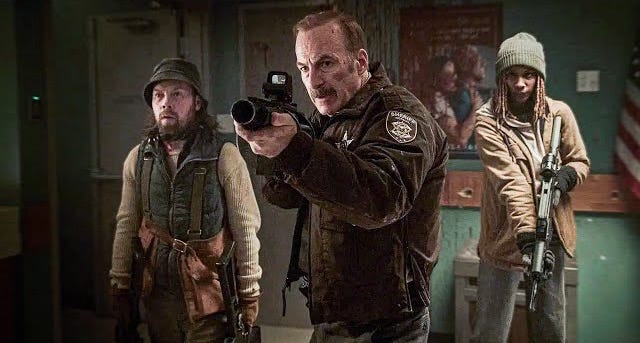
It seems that whenever Hollywood wants to make a thrilling or action-packed movie, one that is meant to be mindless fun or a guilty pleasure, screenwriters all too often still feel the need to include some serious element or undertone in the storyline. This may be done to give the film’s narrative some gravitas, or because there is some deep-seated belief that it is wrong or a waste of their talents to make (and watch) such vacuous entertainment that has little or no substance. Sometimes they get the formula correct, and other times, they don’t. The film Normal gets it mostly right.
There’s a New Sheriff in Town
The film opens up in Osaka, Japan, where a Yakuza oyabun watches as three of his underlings are brought before him to perfom a yubitsume ceremony that is connected to some unspecified failure(s). Two of them perform the ceremony, and after the third refuses, he is beheaded on the spot. The two left alive are told they are being given a second-chance to redeem themselves by handling an overseas account. When they ask where, the oyaban replies, “Minnesota,” as the camera pans onto a series of alert lights with one marked, “Normal, MN.”
The film then switches to a wintery farmland landscape and the small town of Normal, as Ulysses (played by Bob Odenkirk) arrives in town to serve as its interim sheriff for the next eight weeks until a new one can be elected. He is currently separated from his wife, and throughout the film he calls and leaves messages for her which serves as a kind of narration. Prior to this role, he has been taking one temporary sheriff assignment after another, and has been living on the road since his separation began. He spends his first day of work getting to know his quirky deputies, the police staff, and the towns’ eccentric residents. At the beginning of the film, he spends most of his time on activities such as breaking up fights over unfair prices, varying dye lot colors at local stores, helping a woman at the hotel he is staying at get her food unstuck out of a vending machine, and writing a note to the local bar owner Moira (played by Lena Heady) instructing her to “park better next time,” instead of issuing her an actual ticket for parking next to a fire hydrant.
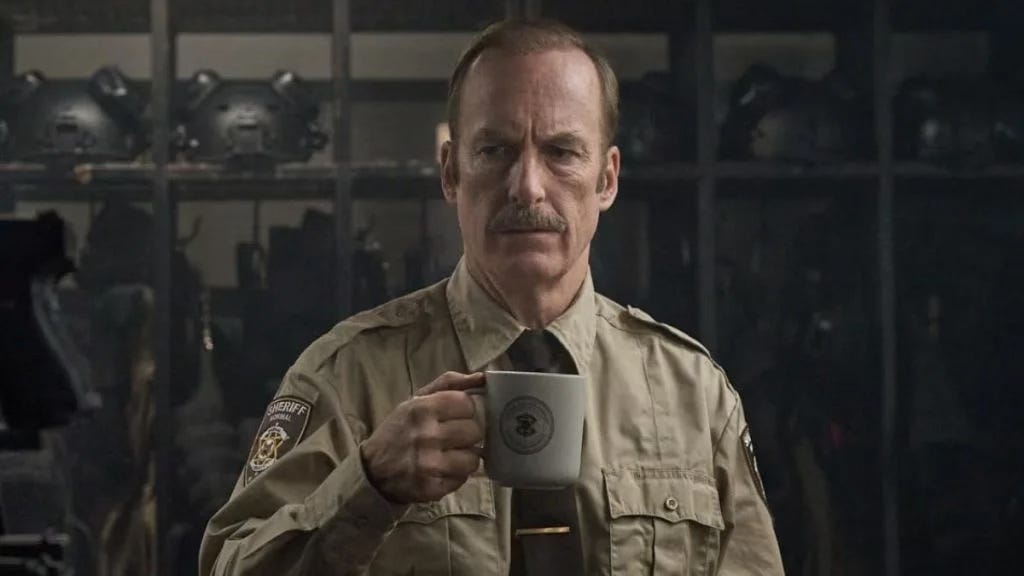
Over time, he begins to notice several things that seem out of place for the small town, such as the residents raising over a million dollars for a mysterious local building project, or the massive arsenal (including military grade weapons and C4) and the MRAP-style vehicle that the police department possesses. He meets the town’s mayor Kibner (played by Henry Winkler), who relays the bizarre circumstances of the previous sheriff’s death. Soon thereafter, he meets the former sheriff’s daughter, Alex Gunderson (played by Jess McLeod), who shares doubts about her father’s death being an accident, and highlights the level secrecy that exists regarding almost everything and everyone in the town.
After the background has been set, the town’s bank silent alarm goes off and Ulysses and his deputies rush to the scene. Ulysses enters the bank to try and diffuse the situation, but when the robbers demand to be let into the vault and shots ring out, the deputies outside open fire on the bank, the robbers, and even Ulysses. From this point on the film portrays a hostage situation, a running chase, and gunfight across town as a snowstorm rolls into town. It ends in a comical truce with the townspeople when Ulysses learns about the town’s dark secrets which includes corruption, the murder of the previous sheriff, and the deal the mayor Kibner and the people of Normal made with the Yakuza (which is held within the bank’s vault!) in order to keep their declining small town afloat. When the Yakuza arrive in town, the truce is even more comically broken, resulting in an over-the-top gunfight that both shocks and amuses.
A Ridiculous Premise but an Entertaining Film
If you wanted to sum of Normal you might say that it is an entertaining amalgam of various films. First off, imagine a town full of quirky people reminiscent of the residents of the town of Cicely, Alaska, from the classic 90’s television series Northern Exposure. Next, combine them with the dimwits who sat around discussing independent contractors on the Death Star from the indie movie Clerks, who all eventually grew up and retired in a small town in northern Minnesota. Then add in the deadpan humor of various Simon Pegg films, such as Hot Fuzz or Shaun of the Dead, the action and extreme violence of the John Wick films, and the dour narrative-style of classic Cohen Brother films such as Fargo or No Country for Old Men (with their trademark formula of a simple plan going awry and the correction to the plan leading to even more problems) and you have the film Normal.
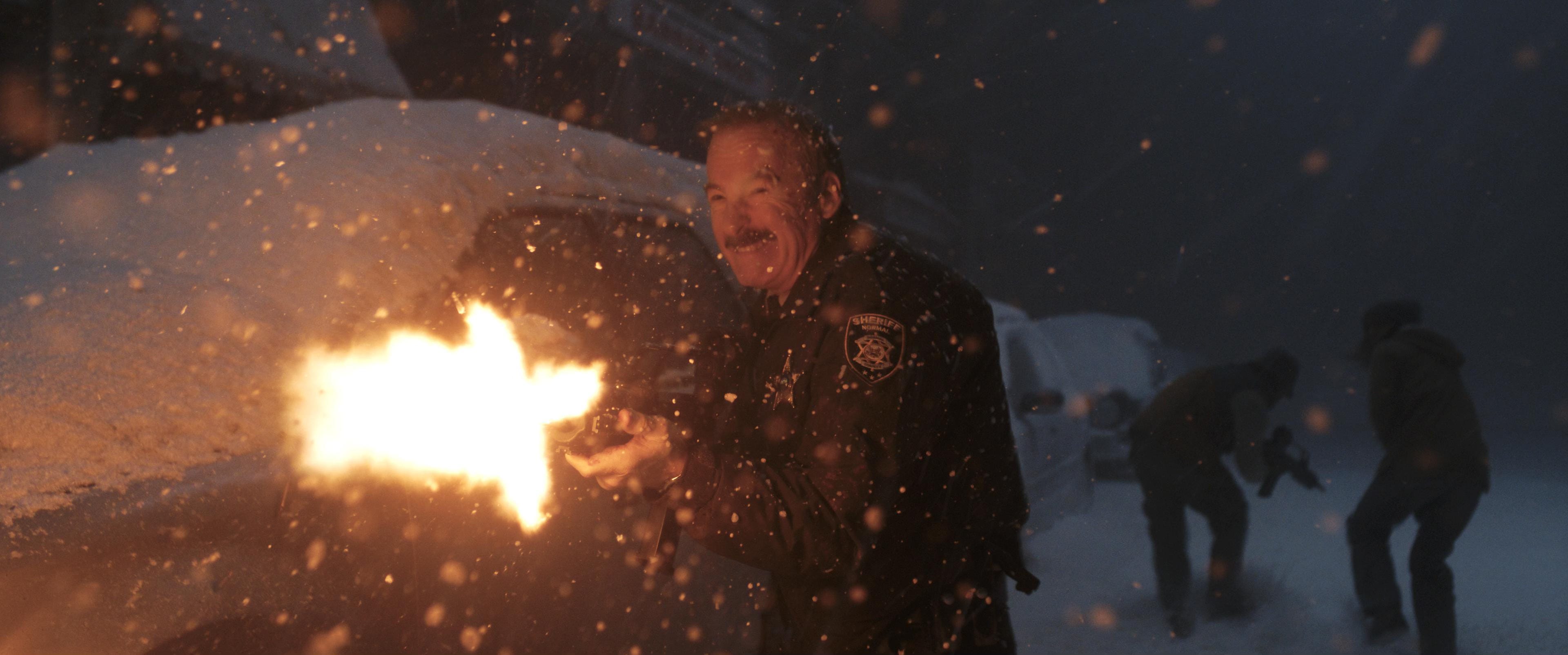
The premise of the story at first seems far-fetched, and its ridiculousness is played out with the film’s sardonic humor as the town attempts to deal with the Yakuza risks being exposed by two inept bank robbers—who aren’t smart enough to realize that bank tellers have very little cash on hand because hardly anyone uses it anymore. It is reminiscent of the second season of the HBO series, The Wire, where faced with a significant decline in shipping in Baltimore’s ports, the head of the stevedore’s union makes a deal with a criminal organization in order to keep his union and its workers afloat. In Normal we see a town like many other “normal” American small towns filled with an aging population, whose children have moved on due to lack of opportunities. Some towns manage to find legitimate and fruitful ways to survive, while others have, out of desperation or greed, turned to destructive and criminal means in order to survive.
At the heart of the film is a moral darkness whereby the town’s residents have sold their soul for financial gain. Ulysses’ darkness is displayed in his backstory, and the nightmares he experiences throughout the movie. At first, he tells the bartender Moira that they stem from his regrets over a split-second decision he had to make in a domestic disturbance case involving a life-long friend, who had been shot by his own daughter. Later, he reveals to her that it was actually he that had shot his friend, after learning that he had been abusing his daughter. The guilt has haunted Ulysses from job to job, and is the main reason why he is estranged from his wife. His moral compass, while disoriented, is still in place and is why he cannot simply be “bought off.” At one point Mayor Kibner suggests that Ulysses might want to consider settling down in Normal, and later during the bank robbery, Kibner phones Ulysses (who is inside the bank) to tell him that he will be welcomed into Normal’s community if he just kills the bank robbers. He refuses, and is hunted down because of it, leaving the audience to ponder the question of what price one might put on their soul, even if it means saving your town, and possibly your own livelihood. Ulysses chooses one path, while Mayor Kibner and the town of Normal have chosen another.
Normal is certainly not the worst film out there. And if you try not to take the plot line too seriously, some viewers will find it enjoyable (albeit not for all audiences) as pure and simple mindless enjoyment.
Photo Credits- IMBD, Culture Herald and Screenrant.
Wasn’t there some movie with Arnold who becomes a sheriff and ends up duking it out with some cartel? Oh well, this sounds very similar. I originally thought the movie was a sequel to Nobody, but it seems to take a slight zag.
It sounds like the kind of thing designed for Xers and Millennials who saw these kinds of movies in the 90s and early 00s. Blockbuster (remember them?) was chockfull of them. Gosh, so many aging action stars could sleepwalk through these movies and earn a cool few million each time.
Now, this all has to be approached ironically, which gets tiring fast. An earnest movie at this point would actually be a little different. Still, there needs to be something else. Korea seems to have figured it out, usually adding some more character work or social commentary. We’ve lost our way here in the States and it’s all pretty mediocre.