

Liminal Space: The Border Between Civilization and Barbarism
The boundary between civilization and barbarism is porous, meaning that it needs to be defended vigorously.

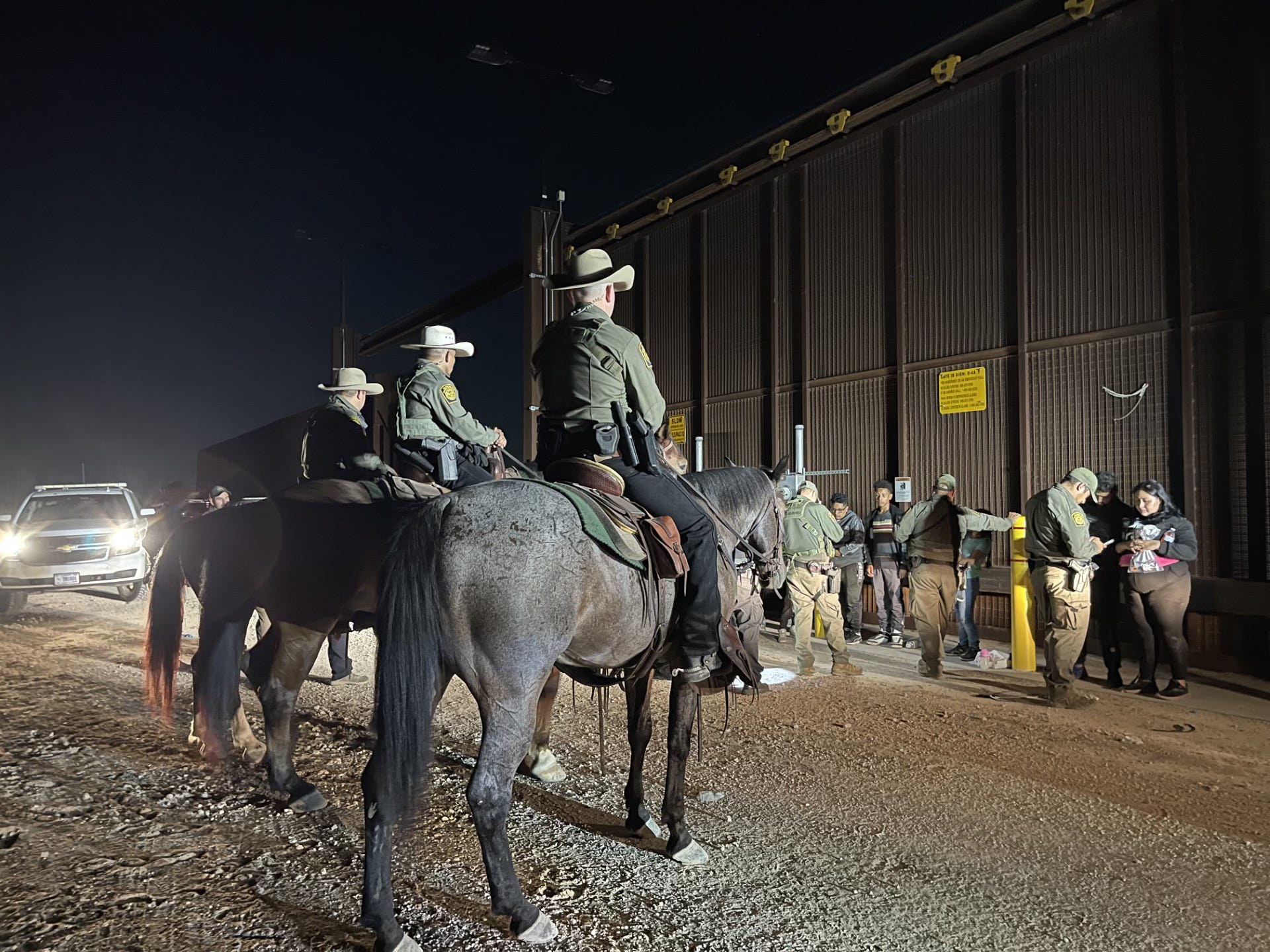
Written by Rocky Elmore, Out on Foot: Nightly Patrols and Ghostly Tales of a U.S. Border Patrol Agent, is a book that focuses less on the paranormal or ghostly aspects than some might suppose. All of the phantasmal encounters or occurrences are described in a straightforward manner, with none of the embellishments or wild enthusiasm that are typically found in other collections. Mr. Elmore’s sober, conversational approach makes recounting his days as a border patrol agent stationed near San Diego all the more believable. He does not demand that anyone believe in the apparitions he and others have encountered; rather, he simply states the facts, leaving readers to determine what they may choose to believe.
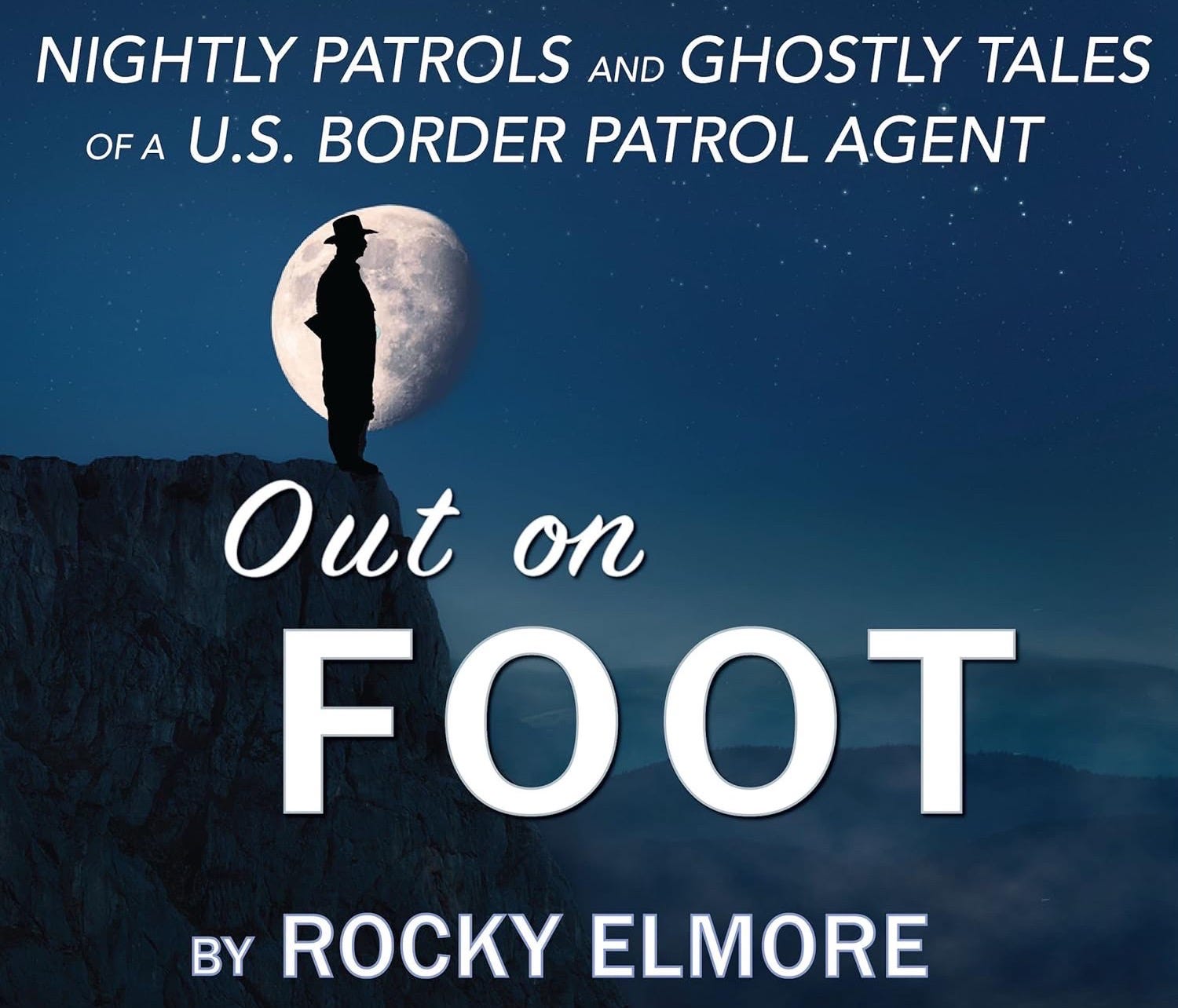
But what his stories, ghostly and otherwise, say about the border as a “liminal space” also applies to civilization and barbarism, in addition to the physical border. “Liminal spaces” are intermediate areas where two things brush and boundaries, instead of colliding, blur or become permeable. These “liminal spaces” occur naturally: for instance, twilight is neither night nor day. The edge of a forest is neither woods nor open plain, while All Hallows Eve and even Christmas Eve blur the boundaries between life and death. Even in Pirates of the Caribbean, we see that a sandbar or shoal is neither land nor sea. The rules that bind a being or person to either land or sea are thus flexible in their application.
Essentially, considering a border line, a person can get creative about the interpretation of the rules no matter which side he or she hails from. The film A Walk to Remember demonstrates this with Jamie Sullivan (Mandy Moore) desiring to be in two places at once. As a consequence, her love interest, Landon Carter (Shane West), drives her to the state line and has her straddle it. Ergo, she is able to stand in two places at once. It is a creative interpretation of the “liminal space” as a state line, showing just how porous borders can be via some quasi “scientific” interpretation. Add in ghostly or strange elements, and this porous nature becomes even more fraught with confusion than before.
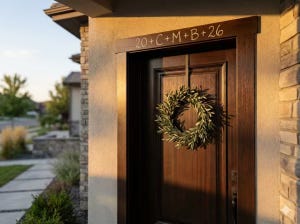
People like to think of borders in the way that they think of their homes: solid and inviolate, with designated entrances and exits. However, that picture has more in common with what folklore calls a “threshold” than it does with the reality of a border. A “threshold” may be described as the boundary delineating the footprint of one’s home, with the entrances being the “weak points” or areas that need the most protection, since they allow for access and egress. This is why vampires in many versions of folklore need to be invited in; they cannot pass over a threshold without first obtaining permission from the inhabitant. As long as the threshold is maintained by the owner, any magical being who attempts to pass it without express permission (or without a lot of magical firepower) will fail.
Civilization and barbarism are two states of being, much like day and night. This means that where the two meet, there is a border, however these borders are naturally permeable. Since civilization is a fragile thing, one must guard its borders closely, lest something a little bit barbarous slip through a “weak point” and be allowed to wreak havoc. In his job as a border patrol agent who often traversed many liminal spaces, Mr. Elmore’s memoir Out on Foot gives a reader a keen sense of just how dangerous this permeable space can be.
Out on Foot
In his article Warrior or captive? Which do you want to be?, Mr. Gustavo Jalife makes the cogent point that civilization relies on clearly delineated laws, constitutional values, and shared tradition. As Russell Kirk before him, he argues correctly that a civilization needs to be just and orderly in order to be truly free. However, when civilized individuals begin to admire barbarism’s “morals” more than those of their own civilizations, they place their countries and their civilizations in serious jeopardy.
Mr. Elmore illustrates the permeable nature of moral as well as civilizational borders when he states that most of the illegals whom he and his fellow agents captured were on friendly terms with the agents. They even “deputized” some of the individuals to help them handle “traffic” in cases where they were required to process hundreds of aliens a night. It may not have been cordial all the time, but there was a sense of camaraderie, or at least shared humor between these persons and those who caught them.
This was never the case with the smugglers, whom Elmore calls “zombies” for the lack of humanity in their eyes. These smugglers were very deadly, not only to the agents – who worked in pairs or alone – but to the people whom they smuggled. Evidence of this was found in the “rape trees,” where the smugglers would discard the underwear of girls and women that they had raped, or places like Hobo Junction, where entire families were murdered and married couples were tortured. The headless body of a woman found in a national park also attested to the “zombies” possessing an extensive range. Barbarism incarnate, they can, will, and have, killed across centuries on the southwestern border, and not just within the last few decades.
Once, out of curiosity, Mr. Elmore and a fellow agent investigated a dilapidated house where a family was said to have been murdered by Mexican bandits at the turn of the 20th century. Mr. Elmore and his companion witnessed “ghost lights” around the house, but the official record of the owner’s murder does not include his family (rather, this has been inferred by oral tradition). Yet there are many such unreported deaths, rapes, murders, and more on the border today. This is due to apathetic national interest or, more often, political expediency. These factors leave this “liminal space” ripe for the presence of ghosts, such as the ghost of the little girl in a white dress whose appearance has caused several agents to quit their jobs.
Protecting the Border
The American frontier, like most frontiers, can be seen as a “liminal space” – a flexible border between two worlds. For centuries, our southern border was a “frontier” border; the line on the map was plain, but people living on either side tended to treat it as a mere suggestion. Pancho Villa is the most infamous for his attack on Columbus, New Mexico, as well as other locations in the state and the country. If predators are able to use a “liminal space” to come and go as they please, they will naturally cause a great deal of pain, or even bloodshed.
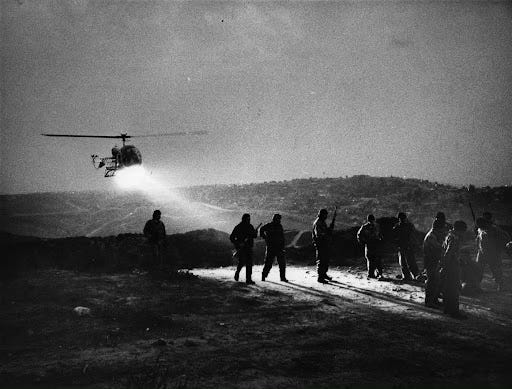
Protecting civilization means not only recognizing the “liminal space” but defending it. Mr. Elmore discusses how this was done in the 1970s and 1980s by the San Diego Police Department’s specially created Border, Alien, and Robber Force, which Joseph Wambaugh memorialized in Lines and Shadows. In Mr. Elmore’s words, the Border, Alien, and Robber Force “stacked bodies in the triple digits” until the bandits from Mexico got the message to stop preying on everyone. After all, the bandits were not picky: they might prefer to prey on illegal aliens, but both Mexicans and Americans were considered as fair game. The creation of this San Diego force was key to stopping the depredations committed by these violent predators.
In his article, Mr. Jalife notes that the border between civilization and barbarism is as permeable as any physical border. The Lombardi tribesman abandons his people to fight for civilization while the captive Englishwoman chooses barbarism. Both live in the “liminal space” between the two societies even after they make their choice, as they are identified to some degree with the place or tribe from which they hail.
Today, many self-described elites praise barbarism and seek to mingle it with civilization, effectively mixing two incompatible blood types. However, at least some cross-pollination across a border is inevitable due to its permeable nature, which is how civilizations benefit. The problem, Mr. Jalife rightly asserts, comes when the elite decide to drag their civilization into barbarism in order to secure their own power.
Conclusion
Borders are “liminal spaces” which require policing, since they are the “threshold” of a nation. What we need is a force that is empowered to defend against the threats that will abuse these “liminal spaces” for their own ends, along with an active recognition of the fact that the defense of our borders is necessary to maintain the “threshold” of civilization. Not all breaches will be ghostly or fey, but those committed by Mr. Elmore’s “zombies” can be as deadly as any fictional encounter.
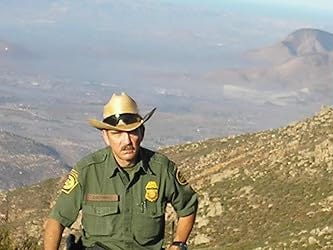
Abraham Lincoln famously said that a house divided against itself cannot stand. Neither can a house stand when the door is left wide open in all weathers to allow any persons to enter and leave as they please. The Border Patrol maintains the “threshold” of America’s “house,” so let us grant them the tools and the respect they need to do their jobs. Otherwise, we may find ourselves besieged by real “zombies” – or worse.
Photo Credits- Border Report, Amazon, The Hallowed Way, Facebook, San Diego Police Museum.
 | A guest post by
|
What a great essay. Thought I'd read all the Wambaughs so was thrilled to see one I hadn't - got it on Amazon. Will get the Border Patrol one as soon as I'm done with that (naturally...Out on Foot isn't on Libby...no surprise there). I really enjoy your interesting essays - thank you so much.
“A house divided against itself cannot stand” is originally from The Bible:
“Matthew 12:22-28
New King James Version
A House Divided Cannot Stand
22 Then one was brought to Him who was demon-possessed, blind and mute; and He healed him, so that the [a]blind and mute man both spoke and saw. 23 And all the multitudes were amazed and said, “Could this be the Son of David?”
24 Now when the Pharisees heard it they said, “This fellow does not cast out demons except by [b]Beelzebub, the ruler of the demons.”
25 But Jesus knew their thoughts, and said to them: “Every kingdom divided against itself is brought to desolation, and every city or house divided against itself will not stand. 26 If Satan casts out Satan, he is divided against himself. How then will his kingdom stand? 27 And if I cast out demons by Beelzebub, by whom do your sons cast them out? Therefore they shall be your judges. 28 But if I cast out demons by the Spirit of God, surely the kingdom of God has come upon you.”
https://www.biblegateway.com/passage/?search=Matthew%2012%3A22-28&version=NKJV