

Identifying the Problem. But is the Solution Correct?
As the Summer season approaches, the problem of "teen takeovers" in major cities is bound to get worse. One suggested solution is to hold parents accountable for their kids' crimes. But will it work?

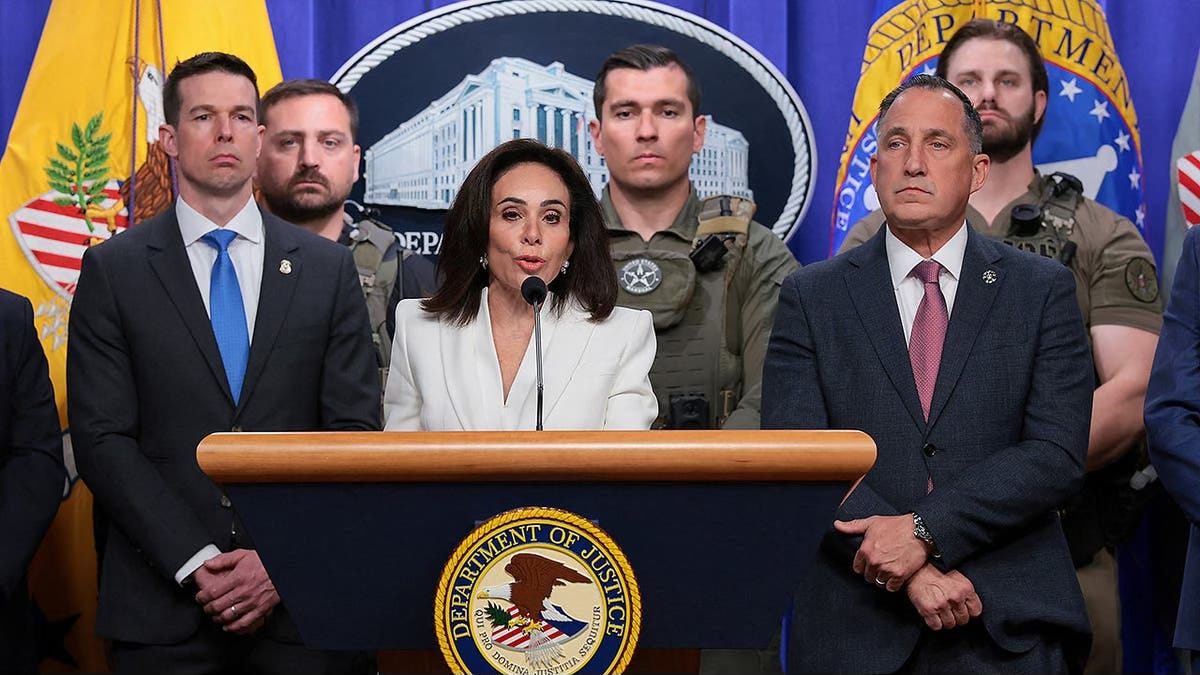
Recently U.S. Attorney for the District of Columbia Jeanine Pirro held a press conference that caused a bit of a riptide in DC’s cultural waves when she stated that when warranted, her office would start holding parents accountable for the criminal actions of their juvenile children. “We’re going to charge them, and if you drop your kid off and you fail to supervise them or you let them skip school to join the chaos, you are going to face fines, court-ordered classes and possible jail time.”
This decision came in the wake of yet another “teen takeover” in Washington D.C., this time after a brawl broke out at a Chipotle restaurant in the cities’ Navy Yard district. Teen boys, some of whom were wearing hoodies (even though temperature was in the 80’s) and/or medical masks in order to hide their identities, started fighting and even used the restaurant’s wooden highchairs to cudgel each other, as the staff and patrons cowered in the corners attempting to stay out of harm’s way. The fight lasted roughly thirty seconds before they exited the restaurant and joined a mass of teens that were already outside in the streets.
It was only in August of last year that President Trump declared a “libertation day,” and ordered the National Guard and other federal law enforcement agencies into the city to tackle the worst of the crimes for which the our nation’s capital has long had a reputation for—namely homicide, assaults, robbery and carjackings (half of which were committed by juveniles, some as young as twelve years old). Since then, DC has already experienced a marked drop in the aforementioned crimes, thanks in no part to DC’s mayor Muriel Bowser and the Metro PD who had not only been found to be lax on crime, but were also reported to have falsified crime reports and statistics for the purpose of downplaying the city’s horrendous crime problem.
However, despite the drop in major crimes as well as the institution of a curfew in certain parts of the city (such as the Navy Yard) teen takeovers still remain a problem. Frequently, large groups of teens show up in public disrupting the flow of traffic (cars and pedestrian), in addition to causing property damage, shoplifting, and creating situations where fights regularly break out. And while many local residents are applauding Pirro’s announcement, her decision is not without its critics. A Neighborhood Commissioner for Navy Yard named Nic Wilson parroted the standard leftist’s pablum about how “we can’t police ourselves out of this situation” and (strangely) adding the point that “policing and putting people in jail is actually kind of how we got to where we’re at now.”
According to Wilson, going after parents won’t help to reduce the teens’ criminal activity. He argues that many of these teens are out on the streets because there is no one at home as their parents are either working or in jail. And, in some instances, the chaos of the streets may offer a better place for them when compared to the dysfunctional lives that they experience at home. Wilson’s and other local commissioners’ solution to what they see as “federal overreach” in their city is to “invest in our communities and families,” by which it can be assumed they mean the same generic call for more public funding for even more government programs.
Addressing the Right Problem, but the Right Solution?
It is frustrating to hear another pompous blue city pooh-bah mouth the same tiresome talking points on how the solution to society’s ills is always and forever— “more money.” Of course, in a post-DOGE and “Learing Center” era, such calls for additional taxes and increased funding are unlikely to be taken seriously. Nevertheless, if one is willing to give the situation in D.C. some serious thought, they may have to (albeit grudgingly) admit that there might be some grain of truth in the councilman’s words.
While I whole-heartedly agree with Jeanine Pirro’s intentions, I am not sure that holding the parents accountable will work as well as she is expecting it to. If Commissioner Wilson is correct about the living situations of many of the teens who are committing these crimes and engaging in these takeovers, then he is probably not entirely wrong about whether these issues can be resolved through conventional “policing” efforts. If their parents are already in jail, are working (you really gonna fine or arrest an overworked parent?), or they happen to be toxic (which is entirely different conversation and solution), then arresting the parents is not going to accomplish much at all.
Of course, Pirro did indicate that jail time is only one option, but fining or sentencing parents to take certain classes or perform acts of community service is not guaranteed to solve the problem either. First of all, who’s going to run the classes or supervise the community service, and who is going to pay for it? And in light of the recent revelations of rampant fraud in local social programs, especially in a notoriously leftist-run city like D.C., why would anyone trust that those options would actually work? After all, many such programs and mechanisms are probably already in place, but which obviously are not working any more than Bill Clinton’s midnight basketball leagues did in the 1990’s. Second of all, so long as there is no desire or political will by local elected officials, such as Muriel Bowser, to enforce existing laws to their fullest extent, it should be expected that even Pirro’s best laid plans will break against an entrenched ideologically-ensconced city bureaucracy and criminally empathetic activist judges who drop or suspend criminal charges almost as fast as they are issued.
Finally, as someone who’s day job is a mid-level manager in a retail store, and who has also worked in loss prevention, I can speak from experience that “policing” juveniles is not an easy (and probably an almost near impossible) task. I have on many occasions had to deal with kids (some as young as seven!) who are shoplifting, acting unruly, or are hanging out in the store to do anything but shop. Most of them are well aware that the employees can’t touch them, that the law won’t pursue them if they steal something under a certain amount, and that even if the police are called, they will be gone before the authorities arrive. Moreover, they will even remind you of these realities in the foulest of language strewn with so much slang that half the time I can’t understand what they are saying.
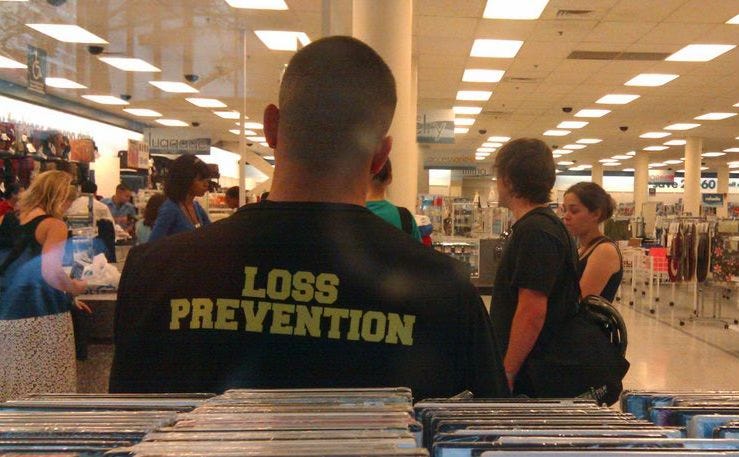
You don’t have to be an “expert” to appreciate that their behavior is the result of bad or absent parenting. However, if you tried speaking to the parents of some of these kids (which I had to do from time to time) you find that many of them are just as defiant and incorrigible as their children. The issue is not merely a problem of bad behavior that just needs to be educated, motivated and corrected (the traditional Marxist fantasy sees people as pliable widgets). But rather, the problem is an entire lifestyle, culture, and worldview that exists among far too many youths (and their parents) where they will lie, cheat and steal without even the slightest amount of regret or shame. Unfortunately, the problem is definitely not one that has a quick or simple fix that will take at least as long as it took for our social mores to get where they are now. Thus, as much as I applaud Jeanine Pirro’s decision to start holding parents accountable for their kid’s criminal behavior, based on my personal experience, my response is simply to say:
“Good luck with that.”
Photo Credits- Fox News and Steel Bison Security.