

Elegy for Scopes – Part 1
This week marks 100th anniversary of the end of the famous Scopes Trial. Here is the first of two parts looking back at the trial through a historical and scientific lens.

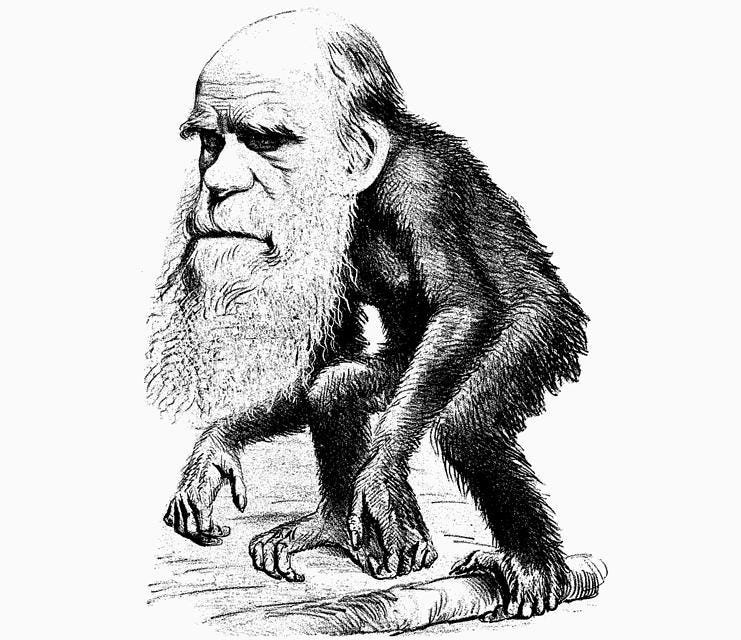
This week marks the concluding centennial of the famous Scopes trial that took place in Dayton, Tennessee. Earlier that year in March the state legislature had passed the Butler Act, later signed by the governor, to prohibit the teaching of evolution in public schools and state funded universities. The American Civil Liberties Union (ACLU), founded only five years before, immediately sought to challenge the law on religious establishment grounds.
The 1920s were a time which presented opportunities for rapid shifts in urban cultural mores and for circumstances which offended rural sensibilities. Recruited by the ACLU, high school football coach John Thomas Scopes became the stand-in defendant for ostensibly its violation. Meanwhile civic leaders in the town welcomed the publicity, and citizens around the state gathered to support the prosecution. Held at the Rhea county courthouse, Tennessee v. Scopes began on the morning of July 10, 1925 accompanied by radio broadcast and the heat of summer.
The Cast at Dayton
Famed attorney Clarence Seward Darrow led the defense, while former Secretary of State and three-time Democratic presidential nominee William Jennings Bryan spoke for the prosecution, and in particular on behalf of protestant Christendom against the theory of evolution and the atheistic Darwinism that was behind it. The prosecution presented student witnesses who testified that Scopes taught a molten earth that cooled with life’s subsequent development. Scopes remained passive at his trial while Darrow brought witnesses to explain evolution and its compatibility with religious belief.
Bryan countered by proclaiming that the defense’s position undermined man’s place based on the Bible, holding “the Christian believes man came from above, but the evolutionist believes he must have come from below…” In essence, he argued the special creation of humans in God’s image signified their intellectual superiority over the animal order. Such interpretation would imply people had moral duties to God accompanied by prescribed prohibitions in behavior. This view reduced evolution to a corrupting influence, one that was being taught to school children against their parents’ wishes. The defendant’s co-counsel Dudley Field Malone countered with a stemwinder about the imperishability of truth to thunderous applause.
Frustrated by the jury’s sequester from hearing expert testimony with which to scrutinize the statute’s epistemology (i.e., knowledge basis), Darrow sarcastically commented about judicial bias, to which he afterwards apologized to avoid being found in contempt. Subsequently, the defense requested calling Bryan as a hostile witness, to which Bryan agreed. The two legendary men were photographed together at the trial.
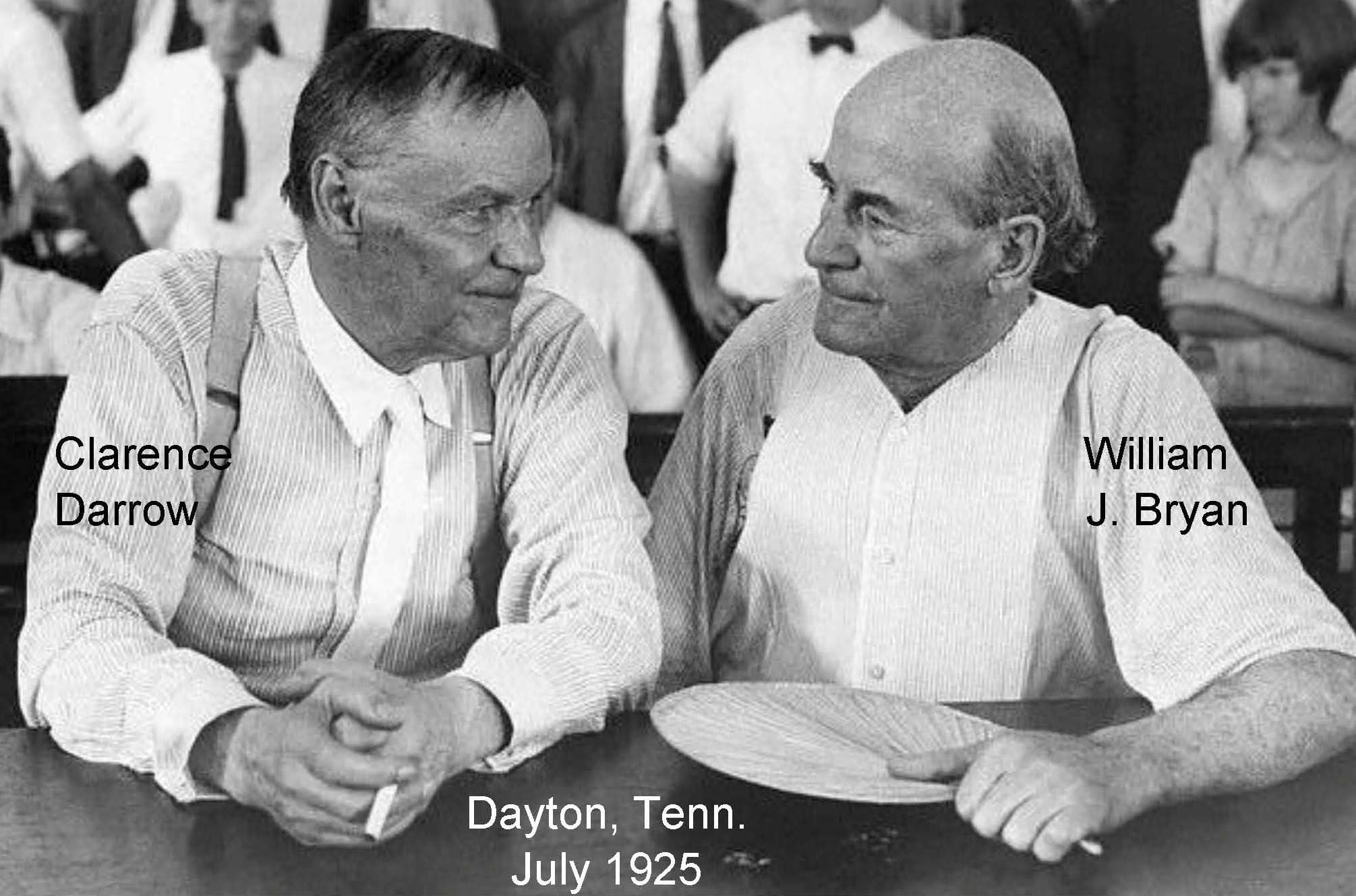
In the sweltering environs outside the courthouse, Darrow subjected Bryan to numerous inquiries regarding events recorded in the Hebrew scriptures, to which Bryan replied he accepted a literal interpretation. Darrow then shifted to the six days of creation, to which Bryan responded with agnosticism on the intervals. Darrow seized on this concession, asking “why can’t we interpret the story of the creation of humans in an evolutionary sense?” Trial proceedings concluded the following day with the jury’s perfunctory conviction accompanied by the judge’s imposition of the fine, which was subsequently dismissed on appeal. Both sides had litigated their positions in Scopes to their respective audiences: secularists on behalf of presumed rationality and individual liberty, and fundamentalists for majoritarian democracy reinforcing ethical behavior obliged by being created imago dei.
Court appeals to overturn the Butler Act failed as not constituting religious imposition due to absence of denominational agreement over evolution’s acceptance. Forty-two years after its original passage, the Tennessee legislature ultimately repealed the statutory prohibition. The following year, the Supreme Court in Epperson v. Arkansas (1968) held that prohibiting instruction of Darwinian evolution conflicts with the Establishment clause. Almost two decades later, Edwards v. Aguilard (1987) affirmed such rejection of ostensible religious instruction in a similar ruling.
Darwin’s Analysis
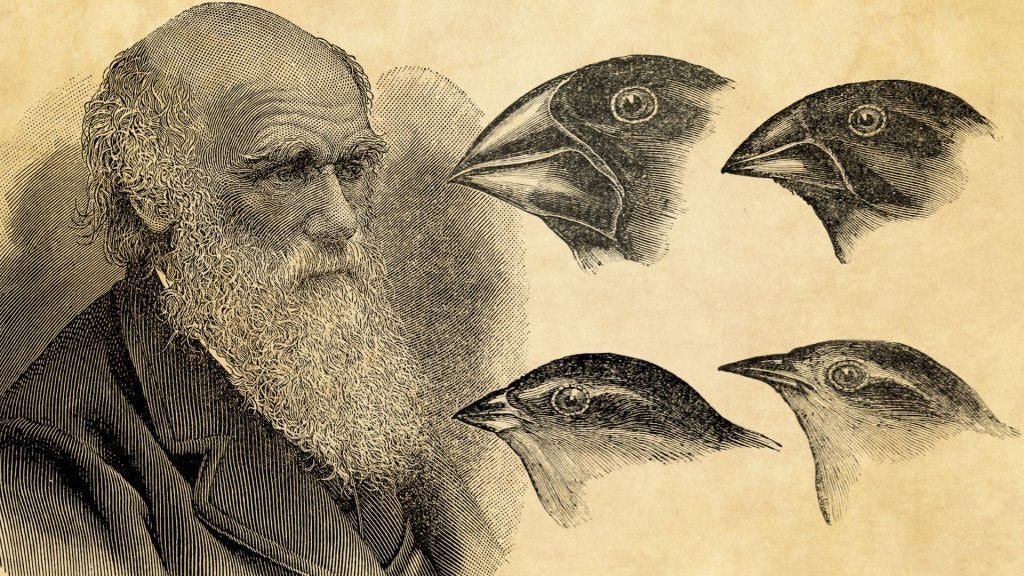
Underpinning the entire Scopes trial was the publication of Origin of Species in 1859 by naturalist Charles Darwin, which introduced the public to biological diversity resulting from environmental adaptation called “natural selection” by inter-species competition. Darwin’s concept of “evolution” presented an empirically based explanation for species variation amidst wide dispersion, albeit not absent rebuke from religiously devout critics. One example of this variation involved various beaks belonging to distinct species of finches, depending on their primary food source.
His Descent of Man in 1871 expanded this theme further into the realm of sexual reproduction and human inheritance from precursor primates. During the late nineteenth and early twentieth centuries, debates focused on chronological synchronization with geology and stellar thermodynamics, as well as genetic mechanisms that could enable physiological changes in biological organisms. Popular confusion over genetic descent led to the caricature of human derivation from monkeys, whereas the theory of evolution expresses far less specificity. The paucity of fossil evidence connecting simians and hominids until the past half century obscured the outlines of genetic ancestry.
Implicit Presumptions
Previous revelations on planetary motion from the eighteenth century came to broad acceptance in view of the ongoing enlightenment. By the early twentieth century, human remains offered limited confirmation that hominid precursors had roamed the earth. Piltdown Man served as one publicized example, until carbon-14 dating demonstrated its fraudulence four decades later. Prior to discoveries of Homo erectus, Australopithecus and Ardipithecus, paleontologists debated on whether cranial enlargement preceded upright posture. The remains at Piltdown favored the former proposal, whereas current evidence supports the latter conclusion.
Irrespective of desultory disregard for fossil dating, continued fundamentalist objection to the idea of materialist origins focuses on moral implications from broad acceptance. Namely, as Ken Ham debated Bill Nye in 2014, “you’re teaching generations of these young people that they’re just animals; that they come about by natural processes.” This would mean that absent a presumption of special creation directed by God, people will lack the intellectual discipline to behave properly, whether it be demonstrated through lax sexual mores or from promoting eugenics.
Proponents of encouraging scientific theory express dismay at such reluctance to accept synthesized explanations of the natural world or even their supporting empirical evidence when they challenge their understanding of scriptural reading and its moral imperatives. This Conflict Thesis has led to a scolding denouncement of any dissent from atheism, echoing critics from the sesquicentennial screeds History of the Conflict Between Religion and Science (1875) by John William Draper and Warfare Between Science and Theology (1896) by Andrew Dixon White. Such inordinately tendentious treatment of historical events can be likened to the fetid writings of Howard Zinn (A People’s History) and Nikole Hannah-Jones (The 1619 Project). These acrimonious accusations traded across the divide lack relevance to those who can are able to reconcile their knowledge of scientific discovery and their religious faith.
For what it’s worth, “liberals” are no more enamored with “evolution” than creationists, although for entirely different rationale. Mention “inheritability of traits” to them (or for that matter the genetic immutability of sex), and they’ll choke on their lattés. For them, all persons (that aren’t killed before birth) are blank slates – moldable into new transgender progressives by the anointed few. Every sentient individual realizes that this wishful Lysenkoism is utter nonsense.
While I recognize the desire to justify moral imperatives for maintaining social harmony among people, my academic training and employment necessitate an appreciation for causality, at least in the classical sense. This precept neglects the “measurement problem” between quantum probabilities and macroscopic phenomena, which necessitates interpretation between states, along with simultaneity issues that arise from special relativity. My childhood fascination of the manned Gemini and Apollo space programs, not to mention dinosaurs, while being raised in an Anabaptist family prompted impetus to internally resolve biblical interpretation with natural phenomena. Needless to say, sentiments that discourage scientific curiosity out of concerns from “erosion” of faith should necessarily be considered as suspect because they suggest a rather fragile doctrinal foundation dominated by imposition of blinders towards any factual challenge of some received narrative.
Photo Credits- images.fineartamerica.com, static01.nyt.com, anthromania.com, i.ytimg.com
 | A guest post by
|